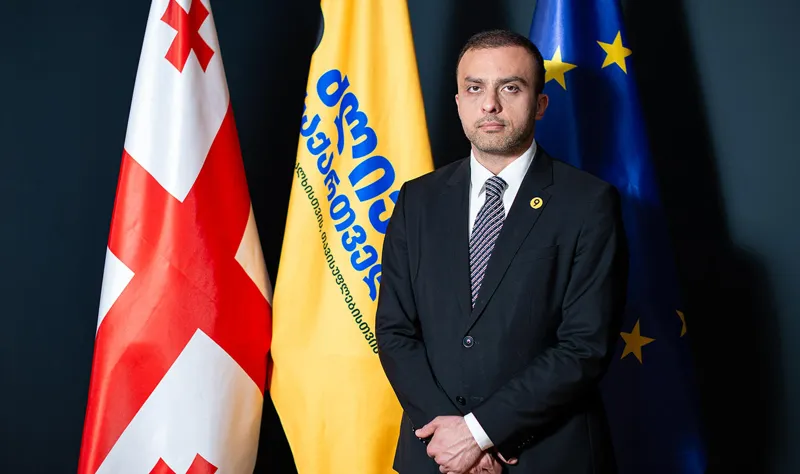
We should talk not only regarding the practice of covert surveillance but also the necessity of seriously reforming MIA and the Prosecutor’s Office – Zaal Anjaparidze
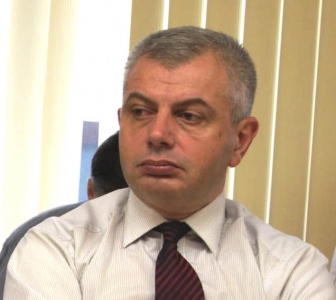
InterPressNews sat down with independent expert, Zaal Anjaparidze, to discuss acute issues of Georgia’s internal and external policy.
--The recently unfolded events in Georgia -- the surveillance bill, the President’s decision to veto the bill as well as the MP’s move to override his veto – have raised a number of questions that have not been answered thus far. How would you evaluate the ongoing developments in the country as well as their repercussions?
- If we discuss the issue only from the political point of view, we will deduce that this issue has laid the foundation for a great deal of political processes in the country. As it has turned out the “Republicans”, “Free Democrats” and the “National Movement” can have a common world outline and back one another in some specific situations. They have already found something in common and this legislation has helped them in doing this. Since such sensitive and delicate matters in our country can easily surface in the future, these parties may automatically get involved in cooperation again. In this case, the aforementioned political parties can group according to their ideologies and values. In addition, the ongoing developments have once again proven an indisputable fact -- the Georgian Dream Coalition that has always been a chaotic mix of voices would have disintegrated under any circumstances. The legislation has simply turned out to be a ticking time bomb on which the party has been sitting from the very beginning, and this bomb has simply blown up in the end. Everyone knew that this was imminent. If we take the statements having been issued after the President’s veto was overridden into account, we can speculate that the war between our politicians has not been ended yet and much more is still to come.
On top of that, the surveillance bill has been proven politically inauspicious for the Georgian Dream Coalition. Even more, it can be said that this party was isolated after the bill was passed as some political parties dubbed as pro-western forces have been set against the coalition. Their move to support this bill has exhibited the Coalition as the power that is against Georgia’s integration within the EU.
Whether this way or that the fact is that the recently passed bill is not comparable with the practice that has functioned in the European states. Therefore, this can easily influence the future configuration of our political powers. This can, in its turn, result in the polarization of the Georgian Dream. This process may be deemed to be more positive than negative though.
-We have been left with an impression that despite the over the top statements having been released regarding this issue, neither the parliament nor the president has proven to be ready to address the pressing challenges and resolve the dilemma they face today. In your opinion, why have all the state agencies failed to make an optimal decision that would ensure the country’s security and safeguard the fundamental rights of our people?
- In terms of this issue, we can state that a personal-psychological factor has been involved in this process. As far as I can see, both sides adopted a no-negotiation stance, they have just played chicken to find out which of them is more powerful. Neither of them intended to back down or make concessions. In the wake of this, the opposing parties clashed and a power with more levers in its hands has finally gained a victory.
If you ask me, the President made a mistake when he vetoed a comparably well-formulated legislation that involved the recommendations from different NGOs. A mistake was also made when the Chief executive mandated the Parliament to adopt this legislation on December 1. A refined and meticulously planned legislation was simply impossible to have been drafted in such a short period of time. Consequently, the Government has also used its legitimate right to draft its own version of the legislation and in this way respond to the President’s veto. In this way, even the tiniest chance to build a compromise slipped from their hands. After the President’s decision to veto the bill for the second time, we lost a unique opportunity to rectify the situation by reaching a compromise and the bill was passed. As I have already mentioned before, the process has not been seen through yet and much more is still ahead.
- Right, the NGOs have already openly stated that they intend to file a lawsuit in the constitutional court. In parallel to this, Lia Mukhashavria has also announced that she would discuss this issue in the Strasburg Court. In your opinion, what prospects do both of these lawsuits have?
-If we take into account that the people presiding over the constitutional court that share common views with those opposing this legislation, we will not be able to exclude that the constitutional court may recognize some articles of the bill passed by the parliament as unconstitutional. What kind of measures the European Court will adopt on this particular occasion is a bit difficult to predict though.
Generally the issue of surveillance whips up sandals in the European states as well and Georgia is no exclusion in this regard. On top of that, our people have been afflicted with some kind of surveillance phobia or a syndrome. The Georgians have simply failed to overcome the shock they have undergone under the former government. Precisely this is the reason why I strongly hold that our people must have been involved in this process more actively and this could have helped us avoid to a number of problems we face today.
- As Deputy Shalva Shavgulidze claims by sharing the President’s remarks the Parliament would not have missed a chance to work on this issue. However, as we already know, as many as 77 deputies turned down the President’s suggested version of the legislation. The MPs have released rather interesting statements regarding the President’s legislation. However, whether this way or that the fact is that by presenting the deputies with this not so refined proposition, willingly or unwillingly, Giorgi Margvelashvili granted them a chance to override his veto…
-I cannot really speak for the President and say what was going on in his mind when he introduced our MPs to his proposal; however, this proposition was rather balanced since it provided that the so-called key would have been left to MIA but the role of the court in this process would become greater. Although no one knew how he planned to put his intentions in practice which is why they were left with an impression that the Chief Executive’s initiation changed nothing in the end. However, if the court would have been empowered and its levers on MIA would have become stronger, a compromise would have been reached.
Therefore, I think that the President has offered the parties a balanced version of the legislation but the parties concluded that this project was not a far cry from Beselia-Popkhadze-Sesiashvili’s version.
I can get that this legislation is not compatible with European standards; clearly though, demonizing MIA as a state institution would be something totally inadmissible.
I do share the conviction of the speech delivered by Head of our Government, Davit Usupashvili, who reminded the present authorities of their pre-election promise as per which they would have separated MIA from the Security Service. To cut it short, representing the Ministry of Internal affairs as a vicious institution will clearly bring us nothing good.
- How likely is it that before the parliamentary elections of 2016 the present authorities will resemble the Nationals and found state institutions that will employ all vile methods to achieve their goals?
-- A lot will depend on the human factor. If a political will to hold back from illegally monitoring the people’s private calls emerges, this kind of a prediction will prove to be correct. Still, a lot will truly depend on the human factor. The acting laws and regulations did not entitle the previous top officials to intrude on the people’s private lives by illegally monitoring their private calls; however, some inpiduals still stooped to doing this and if such people are also found in the present government, they can obviously invade their people’s privacy. By all odds, all this will affect the ongoing political processes and the Georgian Dream will suffer the mishaps with which the Nationals were once pelted. As soon as the facts of illegal surveillance are brought to surface, the public as well as our international partners will adequately respond to this. If the acting top officials use this practice for their political purposes they will dig their grave with their own hands.
-You have already talked regarding the necessity of reforming MIA; however, as it appears, some serious reforms are to be passed within the Prosecutor’s Office as well…
- Obviously, some serious reforms are to be passed within the Prosecutor’s Office too. The situation for this matured in our country long ago and the longer the leading team puts this issue on hold the worse it will be for them. Thus, we should talk not only about the practice of covert surveillance but also the necessity of seriously reforming MIA and the Prosecutor’s Office.
Koba Bendeliani
InterPressNews