We have been left with an impression that Russia and Georgia are engaged in behind-the-scenes negotiations – Korneli Kakachia
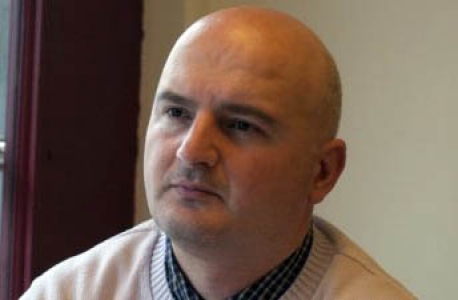
InterPressNews sat down with Tbilisi State University professor, Korneli Kakachia, to discuss acute issues of Georgia’s internal and external policy.
--Prior to the meeting between Karassin and Abashidze, the building of the Mleta-Kobi tunnel and Avaro-Kaxketianskaia road is being actively discussed. The announcement from the Government as per which they have not talked regarding the construction of the road bridging Georgia and Russia does not really ring true as even under the Soviet Union, they planned to build this road. If a road bridging Georgia with Armenia is not built, building the road connecting Georgia to Russia will prove pointless for the latter. Generally, the more roads are built, the better; but in your opinion to what can the fact that our Government has expressed readiness to lay out similar plans with the occupant country point?
-- I still think that if the Government of Georgia agrees with this, it will be making a really dangerous decision. I cannot share the opinion as per which only one side is building the road. Not even a single settled state will ever embark on building a road if it is not sure that another country will allow it to construct the road beyond its border.
I distance myself from making conclusions based on conspiracy theories; however, I am left with an impression that the Georgian authorities have been kept in the loop on the issues linked to the road building work, and Russia and Georgia have held negotiations regarding this as well as other issues behind the closed doors. Otherwise, the Russian side would not have simply gotten down to building this road.
Our readiness to agree with Russia on this issue can mean that the Russian and Georgian Government are trying to negotiate some deals on the matters that go beyond the Karrasin-Abashidze format and that can concern not only the military-economic matters but also the issues linked to our territorial integrity. Unfortunately, our public has been kept in dark and no word has been uttered regarding this issue yet. Anyway, the actual fact is that the present Russia-Georgia relations have really given us a foundation to come to the aforementioned conclusion.
- In winter, this year, at a press-conference in Yerevan, Russian political expert Chernov claimed that Russia would build a land border with Armenia under any circumstances. At the same press-conference, Mr. Chernov also maintained that if Russia redoubled its efforts, it could have built the road to Armenia via Tsalka and the region of Javakheti. Based on this, can we suppose that Moscow is blackmailing official Tbilisi and in the wake of this, Georgia is forced to accept the Kremlin’s proposal on building the road from Dagestan to Armenia via Kakheti?
-- This is not excluded, especially against the present backdrop when Armenia has already become a member of the Eurasian Customs Union and soon it will presumably join the Eurasian Union too. Thus, today, a land border with Armenia is of utmost importance for Russia. In my mind, this issue was thrown in as a point of hot debate long ago, and we also cannot rule out that Russia put some pressure on Georgia when this matter was discussed.
- By accepting the Russian leader’s proposal on building the road, willingly or unwillingly, Georgia is helping Armenia in moving closer to the Eurasian Customs Union. How compatible does Georgia’s integration within NATO and our authorities’ readiness to allow this road to bypass the region of Kakheti seem with each other?
-- For us the construction of this road cannot be auspicious under any circumstances. We don’t know for what purpose they are building this road, in addition, this initiation has an extremely negative connotation from the military point of view. I doubt that the Georgian Government can comprehend this at all. However, I do hope that the dialogues as well as the negotiations between Georgia and Russia do not concern this road only and cover much more paramount issues, such as violent conflicts as well as the breakaway regions of Georgia.
- As the Georgian authorities claim, the potential threats from Russia are seriously being analyzed today. In your opinion, is the Kremlin browbeating Georgia and at this point in time, how can official Tbilisi react to the pending threats from Russia?
- It’s a bit difficult to give a point-blank answer by guessing precisely what kind of threats Russia has posed for Georgia today. However, I still think that on this particular occasion, we are dealing with covert negotiations rather than intimidation. . If you carefully follow the steps taken by Russia when Moldova and Ukraine signed the Association Agreement as well as its reaction to the same step from Georgia, you will clearly see the difference. All this obviously stimulates doubts and makes us presume that Russia and Georgia are engaged in some behind-the-scenes negotiations. We cannot fortify this allegation with arguments but otherwise it is simply excluded that Russia has some extraordinary approach to Georgia, an approach that is totally different from that of Ukraine and Moldova. All this makes me suspect that steps taken by Moscow and Tbilisi are more or less synchronized.
-- The leaders of G-20 have agreed on the Russian Presidents participation in the G-20 summit. After Russia’s depredation in Ukraine, at what may indicate Putin’s appearance in the international arena?
- This cannot really mean that Putin has gotten off scot free. And the clear testimony to this is that the annual forum between Russia and Germany has been called off. The G-20 leaders’ decision to allow Vladimir Putin to take part in the summit only points to the fact that their hope to bridle the aggressor has not yet faded away. The international Community simply tries to keep its door for Russia ajar. However, everyone knows perfectly well that Russia is strongly determined to follow the already chosen wrong path – everything in Russia, including the new laws regarding the social networks, the Government’s attitude towards the media outlets as well as its opposition is a visible testimony to the aforementioned.
- I think that not even a single man can be found in Georgia who was not glad to hear the hope-provoking announcements from the representatives of the government after a match with Tskhinvalis’ “Liakvi.” However, despite this, after the match, very tenuous information has been released regarding the footballers from Tskinvali. What kind of a comment could you release regarding the issue and can we hope that this match has laid the foundation for the process of reconciliation?
-- I have no idea whether or not this match has laid the foundation for this process; however, we can assume that some deals regarding South Ossetia are being negotiated between Russia and Georgia. While entering the region of Tskhinvali, the Russian experts always advise the local separatists to hold back from making sharp statements in terms of Georgia. And this hypothetically points to Russia’s presumable readiness to offer Tbilisi different formulas for its integration with the region of Tskhinvali.
- A project for an agreement on “Cooperation and Integration between Russia and Abkhazia” has been filed at the legislative body of the De-facto Government. This agreement will presumably be signed by the end of the year. Against this backdrop, what can we deduce? Is Russia giving us a chance to move closer to South Ossetia when its troops are still in the region? Moreover, does it want us to forget Abkhazia once and for all?
-- Russia is very well aware of the fact that South Ossetia does not stand even the smallest chance of gaining independence. At the same time, the Russian leader knows perfectly well that Abkhazia and South Ossetia are the only leverages via which it can wield influence on Georgia. In my mind, Russia wants to use South Ossetia to patch up the ruffled relations with Georgia. However, we are clueless regarding the fact of what Russia intends by cultivating relations with Georgia; neither do we know how high a price Georgia will have to pay to mend ties with Tskhinvali.
However, in the case of Abkhazia, the situation is totally different. The project of an agreement that you have mentioned recently says that Russia must undertake an obligation to pursue the policy of recognizing Abkhazia’s independence and recognize it as an independent state on the international scene too. In the wake of this, Russia’s approach to this region is totally different.
It is not difficult to predict that after the agreement is finalized, Russia will fully incorporate the region of Abkhazia within its federation. However, Sokhumi wants Russia to help it in setting up on the international stage as a sovereign state. Although if we closely look at the economic and military component of the agreement, we will realize that Abkhazia is ready to reject its sovereignty, and this clearly contradicts with the requirement from Sokhumi. And, obviously, no one knows which points of the agreement Russia will decide to comply with and which to – neglect.
- During the match in Gori, the government’s football team lacked Defense Minister, Irakli Alasania, and State Minister for European and Euro-Atlantic Integration, Alexi Petriashvili, who are viewed as the staunchest supporters of the western ideology as well as orientation. After the match between the Government and Tskhinvalis’ “Liakvi, information saying that the “Free Democrats” will hold a 3rd congress on 8 November was released. According to Mr. Petriashvili, Irakli Alasania may retake the post of the head of the party. In your opinion, can this information indicate that the “Free Democrats” are leaving the Coalition?
- It’s a bit difficult to expand on this issue as the “Free Democrats” have never taken the lid off their plans. However, your words can correspond with reality. The elections are coming and if there is some discrepancy between the “Free Democrats” and the members of the Coalition, they can easily seek alternative ways to participate in the elections. However, I think that they have not yet made a final decision. Anyway, I do not really think that they will withdraw themselves from the Coalition before the parliamentary elections.
-- As per the co-rapporteur of PACE, Michael Aastrup Jensen, a key problem for Georgia is political polarization. “In Europe, including in my country, the majority and the minority are involved in cooperation, they discuss acute issues together, while in Georgia a gap between the left and right-wing parties is strongly palpable. The National Movement party and the Georgian Dream Coalition are polarized, and polarization clearly cannot be propitious for either of them,” declared Mr. Jensen. The European co-rapporteur does not talk regarding the non-parliamentary political powers; however, opinion clashes are palpable between them too. In the present state of play, how dangerous can this political polarization be for our country?
- If we take the present geopolitical situation into account, we will easily define this political polarization as truly dangerous. In the current geopolitical situation, I implicate our integration within the EU. And all this is happening against the present background, when the tendency of bowing before Russia is palpable in Europe as well as the entire world. In the present state of play the polarization of the public is definitely extremely dangerous. And the thing is worst the fact that even the political powers as well as the representatives of different political outlets contribute to the polarization of public opinion… In my mind, political debates must be held everywhere but the public must enjoy an opportunity to watch and analyze different kinds of political debates.
Koba Bendeliani
InterPerssNews