Moscow’s threats are rather cumbersome to realize
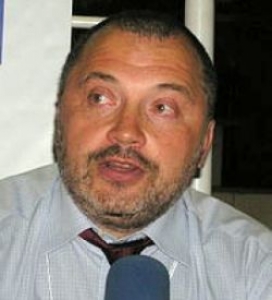
InterPressNews sat down with leading specialist of Moscow’s Carnegie Center who is also an expert in Economic issues, Nikolai Petrov, to find out what kind of policy Moscow will hypothetically pursue in terms of Georgia, Kiev and Kishinev.
- As Russia’s Foreign Minister declared, as soon as the deal -- which Georgia, Ukraine and Moldova has negotiated with the EU -- comes into effect, Russia will adopt measures to uphold the free space of the Community of Independent States. In your personal point of view, what kind of steps can Russia take with respect to the three countries that have recently completed the landmark pact with the EU?
- First of all, Russia’s adopted measures will wither Ukraine. Turnover has already been reduced between Russia and Ukraine. Russia’s enterprises have refused to purchase Ukraine’s goods. Ukraine has also refused to import military goods to Russia. Today Ukraine is Russia’s excruciating headache. Moscow’s threats are rather cumbersome to realize due to the fact that if Russia wants to freeze trade relations with Ukraine it must negotiate a deal with Kazakhstan and Belorussia that are against this.
As it appears, Russia can take some unilateral measures; only God knows whether or not these steps from Russia will be effective. At this point in time, we simply must be faced with threats that are almost unrealizable. If Russia indulges in materializing them, it will sustain serious financial and economic losses.
As for Georgia and Moldova, we do remember perfectly well how the Kremlin attempted to punish Georgia and Moldova under the pretence of violating sanitary-hygienic norms. All these levers are in the hands of Russia at this point in time too; however, today, Russia is more expected to concentrate on Ukraine than on the other two states.
I do not think that at the given stage Russia will break all trade and economic ties with Georgia and Moldova.
-How big is the chance that Russia will increase custom duty on Georgia’s products?
- This risk is not high. Russia has failed to agree on custom duties in terms of Ukraine with the member states of the Customs Union, Kazakhstan and Belorussia. In the present state of play, Russia will be forced to establish tariffs unilaterally; the merchandise from Kazakhstan and Belorussia may also enter Russia and this will batter its economy. In a nutshell, at this point, setting sanctions against Ukraine is a top priority of Russia’s.
-- As Zurab Abashidze, the PM’s special envoy on Russia declared, before the next meeting is held between Karrasin and Abashidze in Prague, the consultations will be held between the Georgian and Russian experts who will scrutinize trade relations between the two states. What kind of a comment could you offer regarding this matter?
- From my point of view, Zurab Abashidze has set a truly paramount goal of cultivating relations with Russia; the public falls short of information in terms of this issue though. The parties will discuss different significant subjects. They have not managed to bring about a great deal of positive changes; however, they are expected to raise the issue of simplifying visa procedures between the two countries. It’s also a fact that we must not expect a breakthrough in this direction; thanks to these meetings between the two officials, the relations between Georgia and Russia are being normalized though.
- On what kind of issues can the Russian and Georgian experts cast light?
- The deal between the EU and Georgia will not draw any radical change in trade relations between Georgia and Russia for which Georgia’s move to complete this agreement is absolutely unacceptable; the Russian authorities have viewed this decision from the Georgian top officials as an unfriendly deed. If with respect to Ukraine, the Russian leader fears that European products will be re-exported in his state, in terms of Georgia such fears are entirely unfounded. At this point in time, Russia is expected to be reluctant to mend ties with Georgia; however, this move from Russia will be a mere expression of its dissatisfaction with our chased policy. Whether this way or that the actual fact is that the completed deal with the EU will boost the quality of our goods, and taking this fact into account, we can conclude that trade relations between Russia and Georgia will remain unchanged. Our pending problems may only be connected to some political-psychological aspects that have been precipitated by our European choice.
- In your opinion, will Moscow’s attitude towards Tbilisi change because of the finalized pact with the EU?
- To tell the truth, this pact is not expected to have any kind of effect on Moscow’s disposition towards Tbilisi as Georgia has been overshadowed by Ukraine… The situation has remained calm in our country so far, and I do not think that any radical changes will take place here in the nearest future. However, I do not rule out that Russia will express its desire to normalize relations with Georgia; it can also easily express its negative attitude towards our European choice.
- Before the deal was negotiated with the EU, Russia took rather active steps in the breakaway regions of Georgia. In Tskhinali, they even plan to hold a referendum on uniting with Russia. In Abkhazia, they have thrown the issue of broadening relations between Russia and Abkhazia into the mix. Can we assume that all this is Russia’s response to our determination to move close to Europe?
--I do not think Russia will radically change its policy in terms of these regions at least until a more serious confrontation is sparked between the U.S. and Russia. However, Ukraine’s current goings-on clearly points to the fact that those at the helm of Russia are making a vigorous effort to avoid countering the West. Thus, in the present state of affairs, Russia is more expected to issue threats rather than taking actual steps. To cut it short, heightening tensions and deteriorating relations with the West does not fall within Russia’s plans at this point in time.
- As they presume, the West’s presumable move to impose stronger sanctions against Russia has made the Russian leader back down. Does this allegation ring true?
- Exactly. The possibility of setting sector sanctions against Russia has resulted in Putin’s retreat. As you yourself see, Putin is seeking ways to somehow dodge the sanctions from the West. Precisely this must be the reason why Putin called them to hold back from holding a referendum in the eastern regions of Ukraine. However, it’s also a fact that Putin’s appeal has not drawn any kind of change in this direction.
Today, Putin is simply carrying out different political maneuvers to head off further sanctions from the West as a new round of sanctions against this state can easily result in the decline of its economy. In addition, through the medium of the aforementioned sanctions, Russia must be trying to deal a blow to the West by causing a gap between the western states, especially when different western countries have different economic interests with regard to Russia. Plus, Putin has set to taking actual steps in Europe by sewing up a deal on gas transit with Austria.
-- Russia’s Council on Foreign Relations has promulgated an interesting article having presented us with a new doctrine on Russia’s foreign policy. The doctrine includes 4 core aspects: 1. disintegrated people’s conception; 2. the issue of safeguarding Russians abroad; 3. the issue of Russian world; 4. the necessity of upholding the idea of a powerhouse Russian civilization. Can this doctrine make us deduce that Russia and the West are still vying for Ukraine and a fight against them has not been seen through so far?
The confrontation between the West and Russia must have mainly been sparked because of the processes taking place inside Russia. The actual fact is that Putin’s rating was immensely low among the Russians. And the Kremlin has used the same pranks it employed during the Russian-Georgian war of 2008 to increase it. As you know, after this war, Putin’s rating instantly soared in Russia. However, in my opinion, by pursuing such a policy, by increasing his rating via such expedients, Putin is walking on thin ice – in order to retain this immensely high rating, the Russian leader will have to offer his people only deeds and strict rhetoric. In addition, he must drive home the idea that Russia is besieged by foes for the Russian people. The nation must consolidate around its leader who must permanently search for the representatives of the Fifth Column and pursue an extremely heedful domestic policy. All this is happening in Russia today – if in the past those at the helm of the Kremlin managed to maintain a balance, they have not decided to rule the country with an iron fist… However, today, the appeals regarding the necessity of protecting Russians who are scattered in this or that country have ceased to be issued every now and again. Similar rhetoric has simply put 20 million Russians in an extremely awkward position. And precisely this rhetoric has labeled the Russians who simply live in foreign countries as hostages.
- If keeping all this in mind, what will presumably happen in the eastern regions of Ukraine?
-I do not think that the Kremlin longs to seize the eastern regions of Ukraine which from an economic point of view are immensely weak and debilitated. Hence, this step would only make Russia undertake extra obligations and this move from the Russian top officials will obviously batter Russia’s economy.
At the same time, we must underscore that the Kremlin is not interested in stabilizing the situation in Ukraine. It simply seeks tools to help in retaining the present status quo in the country as long as possible. In the present state of play, when Ukraine is being continually pelted with different political and economic problems, maintaining the existing chaotic situation in the state undoubtedly falls within the Kremlin’s plans.
Koba BendelianiInterPressNews