Association Agreement Implementation monitoring service must also be created in Georgia, and the PM must preside over it – Levan Bodzashvili
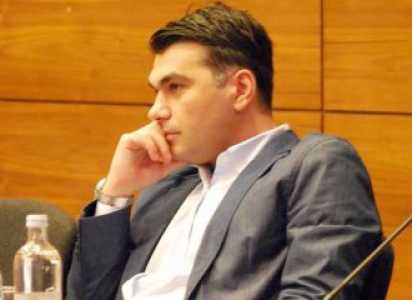
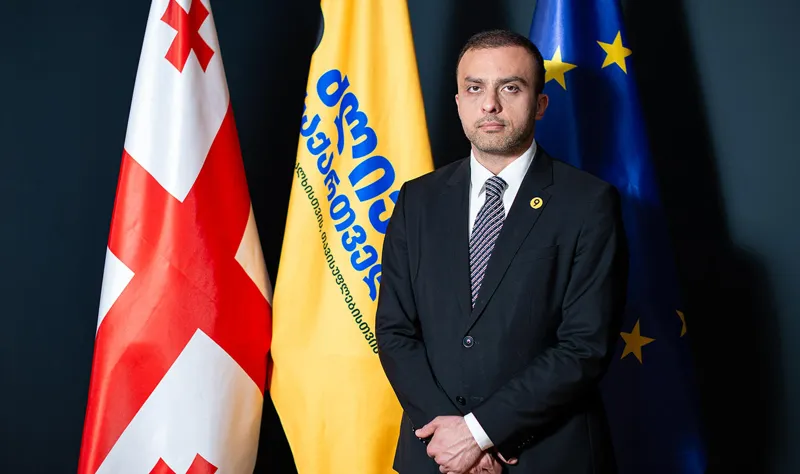
InterPressNews sat down with Fordham University Law School invited professor, Levan Bodzashvili, to discuss the Government’s tasks and objectives as well as the ways to realize them after the association deal is completed.
-- If you would not be against it, let’s start our dialogue by discussing the outcome of the recently held elections. If we discard some deviations, we can boldly state that the country has taken a step forward and the election environment has really improved in Georgia. How would you assess the political consequences of 15 June elections?
Despite the fact that we have not wrapped up the elections yet and a run-off is still left to be held, some positive political changes have already emerged. Firstly, the elections have been conducted democratically, and this is truly a step in the right direction, a step enhancing the prospects of our EU integration; secondly, the constituency has warned the Government, and thirdly, against this backdrop, the voters are not ready for a two-polar political landscape. And most importantly, the Coalition stands a big chance of winning in the second round elections by a wide margin and in the wake of this, the obligation of tackling the state and local problems will be exerted on it totally.
- Incontestable is the fact that the elections of 15 June were characterized by an extremely low voter turnout. Some authorities pacify themselves by alleging that the people’s overarching confidence is the cause of a low voter turnout; while others pin blame on the World Football Championship… In your opinion, by refusing to enter the polling stations what kind of a message has our public conveyed to the Government?
- Generally speaking, a low voter turnout is characteristic of the elections. However, the cause of it is neither a high confidence in the Government nor a world football championship. On the one hand, the voters are simply deeply convinced that the leading party will win in the lections anyway, and, on the other hand, they express protest that results in their decision to hold a neutral position at this given stage.
- A run-off has been scheduled in Tbilisi as well as in 7 other townships of Georgia. Some experts say that the voters have failed to comprehend and decipher the Government’s proposal to get more involved in the political processes. In your mind, what kind of steps must the Government take to actuate the people in the second round elections?
- By all odds, people’s move to cast their votes for a leading or a left-wing party has nothing to do with their activeness. The neutral voters with a lax attitude towards the elections will find it more cumbersome to make their final choice in a run-off. Thus, if mobilizing the people falls within the plans of the leading party, it must undoubtedly take this fact into account.
- Expert Gia Khukhashvili, who first was a confidant of Bidzina Ivanishvili and who, because of some unknown reasons, has voluntarily sidelined himself from the political scene, has issued a statement as follows: “About 40-50 percent of the people is abiding the emergence of new political force.” Renowned actress Nineli Tchankvetadze, who is on good terms with Ivanishvili, has also released a statement as per which the time when the Coalition must be disintegrated in different parties has come. What do you think, what kind of a connotation these statements can bear?
- If today Georgia lacks a political power that can enjoy support at least from 50 per cent of the people, there is not a shadow of doubt that the necessity of emergence of a new political force really exists in Georgia. Thus, the statement from Gia Khukhashvili can be defined as right and the word “new” used by him clearly points to the fact that this newly surfaced political power must be manned with new members only; it must definitely give us fresh blood; and if we follow this to its logical conclusion, judging from Mr. Khukhasvili’s words, we can conclude that the already emerged new power has completely undercut the people’s expectations.
- How realistic seems the possibility of a new political force emerging that can enjoy backing of a half of our people? What type of party can it be? Can we assume that this “new” power will simply be the unity of the pro-Russian forces that have swept 20 percent of the people’s votes together?
- One thing is that around 40-50 percent of our people abide the coming of new political power; however, the fact of whether or not as many as 50 percent of our people will vote for this newly surfaced force is a horse of an entirely different color. The ongoing political processes have molded a Georgian voter as an ultimate skeptic and critic; and, on top of this, our politicians have repeatedly let them down. Against this backdrop, if such a power really turns up in our political arena, it must be manned with quintessential and ingenious professionals only, with the people who have never been politically active before. Our public wants the deeds to be performed, the job to be done, the problems to be handled, their conditions to be improved; they’ve had a bellyful of their political spats and staged performances. As for the pro-Russian forces, I don’t even want the idea saying that such a power will ever be apt to win our people’s backing to ever occur in my head. If this really takes place, we will be able to easily hold the Georgian politicians’ inaptitude to propagate the pro-western powers by making the people realize that they are on the right track today accountable for this… From the point of view of political technologies, a new government produces new expectations; however they have held this process over. As for the West, at this point, time is precious for it. Over the last two years, a core priority of the West has been the people’s mindset and not the authorities’ disposition. And, by all odds, this approach is right and paramount for us. Bidzina Ivanishvili has skillfully used this approach of the western leaders thus far, however, due to some unknown reasons; we have put an end to this practice. Similar are Russia’s countermeasures – in parallel to boosting the anti-European stance, it periodically puts obstacles in the Government’s path and in this way does this country aggressively flaunts its power.
- On September 27, along with Georgia, Ukraine will also sign the EU Association Agreement. As Ukrainian leader Petro Poroshenko declared, he plans to found a Association Agreement Implementation monitoring service. Do you hold any kind of information regarding the aforementioned body; and can the necessity of forming a similar organization emerge in Georgia too?
- Ukraine’s Government has already mandated different experts and institutions to present their proposals on the formation of the body monitoring the implementation of the Association Agreement. Similar organization which the PM himself is to preside over must be created in Georgia under any circumstance. The premier, as the head of the leading power, must be capable of reducing some potential shortfalls of the process of implementation the association agreement, as its ineffective implementation will discredit and denigrate the process of implementation the deal and will also automatically result in an abrupt upsurge of pro-Russian dispositions in the public. It’s without question that the role of the legislative body must also be taken into account while dealing with this process, as a large amount of legislative acts will have to be tailored to Europe’s legislation soon.
- It’s obvious that after Georgia finalizes this deal, it will face a totally new reality; in order to comply with the core points of the deal, what kind of tasks must our Government put on the top of its agenda?
- This is a long-term process… on this particular occasion the government is simply obliged to negotiate its tasks immensely carefully and effectively. It must attract and take in only qualified personnel; as you know precisely their personnel policy is their Achilles’ heel and their biggest drawback; I mean the recently distributed flagrantly boosted bonuses as well as other technical privileges that have the most serious impact on the people’s disposition as such.
-- Recently, while surfing the net, quite unexpectedly, I came across your initiation on holding free consultations for those businessmen who desire to ship their production to Europe’s market. As far as I’ve understood, by doing this, you aim to assist our businessmen in expanding their business activities in Europe. In what manner have the businessmen as well as the authorities responded to your aforementioned initiation?
-- Our prime objective is to set an example for everyone who can in any way contribute to this process. The repercussions of the implementation of the association pact will wither Georgia more than the European companies which enjoy a great deal of marketing possibilities as well as two or three percent loans. At this point in time, the Government is faced with a key task – it must undercut its financial expenses so that Georgia’s business will sustain to enter the European market.
They simply have to elaborate a flexible and well-calculated policy, and they have to implement this policy everywhere they can. The representatives of Georgia must always be on call and must provide our business companies with due support and assistance any time.
A key goal of our company is to hold free consultations to each and every business company of Georgia and assist them to find their way through the legislative maze of the European market. Our initiation covers physical, virtual as well as digital marketplaces. By the way, the additional income of this newly founded market runs up to 1000 euro on each citizen of Europe. We are involved in a partnership with two of the largest legal and lobbying groups of Holland and Belgium and are apt to use this privilege to the benefit of our country.
Koba Bendeliani
InterPressNews