


Irakli Kirtskhalia: So-called "in vitro" fertilization remains as it is due to many factors and reasons - for quite objective and vitally important reasons, it will remain under strict regulation
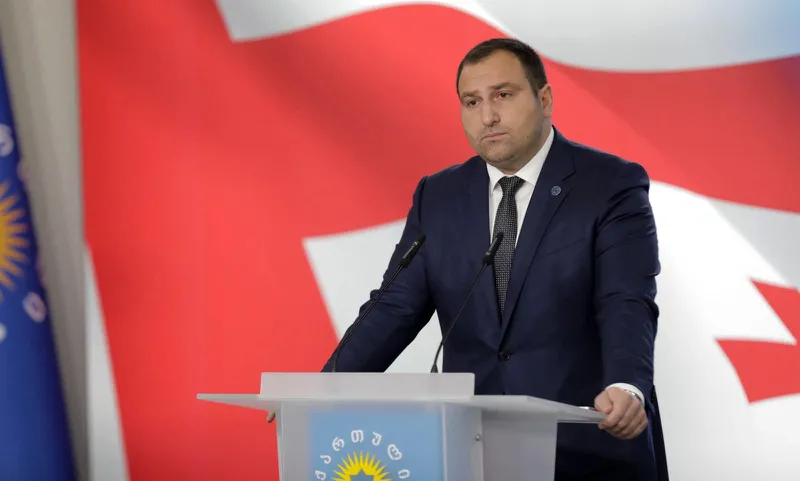
"So-called 'in vitro' fertilization remains as it is due to many factors and reasons. For quite objective and vitally important reasons, it will remain under strict regulation. Only our citizens will be able to use this service," Parliamentary Majority Leader Irakli Kirtskhalia stated following a majority meeting.
As he noted, surrogacy will be completely banned due to numerous risk-bearing factors, including threats of trafficking and the exploitation of women, "because over the years this field has become commercialized, along with which the risks have increased."
"Surrogacy is being completely banned, and it is interesting who will have a sharp and fierce reaction to this. We are ready to listen to this fierce and sharp reaction, enter into a discussion, and provide answers. It will be very interesting to see what arguments the authors of this fierce reaction will have. In general, this field has turned commercial, and these are precisely the risks I briefly listed.
Work on the draft law is currently underway, and over time journalists and interested parties will learn more; simply put, in practice, when we speak about it, there is almost no country left—including EU countries—where it is not either banned or very strictly regulated. However, regarding the commercialization of this issue, which actually existed in 2023 as well, if you compare the 2023 figures in this market—unfortunately I have to use this word—with today's figures, the increase is colossal. This subsequently generates those most important risks we listed; here too we must walk a very golden middle path, and we are not talking about those who have already used this service—it is life, and we do not go into what was and how it was. We are insuring against future risks that accompany this issue. Virtually 5-6 countries, including Georgia from the post-Soviet space, are left where this practice still remains. Our decision is very clear and we will adopt it; the matter concerns only surrogacy and its complete ban.
After the ban, it will require even double and triple control from the executive branch. We believe that specifically this direction must be completely banned. Here, the public might have a question in advance: one is so-called 'in vitro' fertilization, which remains as it is due to many factors and reasons. For quite objective and vitally important reasons, it will remain under strict regulation. Only our citizens will be able to use this service, but specifically this issue [surrogacy], which truly turned into a large industry and which we saw grow year after year—along with it, the ethical risks, and not only those, including risks of trafficking and exploitation, grew significantly—we cannot allow this, which is why we made this decision," Kirtskhalia stated.










