Kakha Kaladze: We cannot widen every street, demolish buildings, or destroy green spaces to make more room for a growing number of cars - we cannot solve the traffic jam problem with overpasses and road widening!
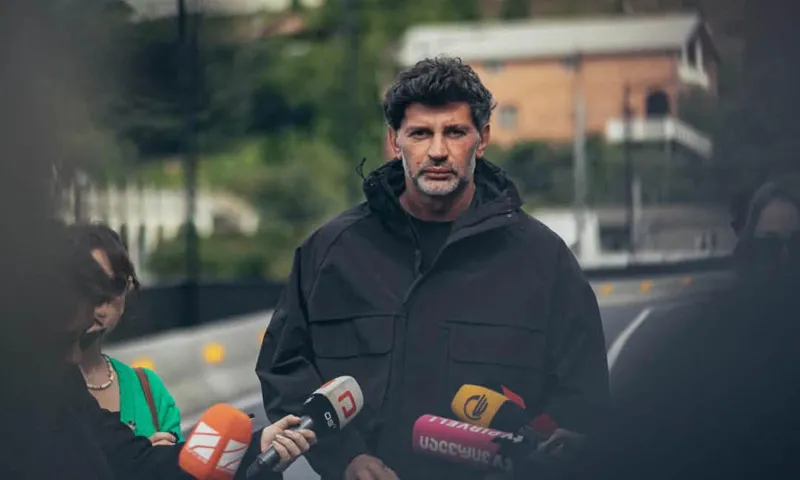
"I understand very well the daily problems and the discomfort that accompanies moving around the city — that is precisely why we continue to work," Tbilisi Mayor Kakha Kaladze stated in a video address.
According to Kakha Kaladze's assessment, international experience shows that the effect of widening roads and building overpasses is temporary, because increasing traffic capacity attracts additional flows of vehicles through the principle of induced demand. As examples of this, the Mayor of Tbilisi cited the Heroes' Square transport hub and Agmashenebeli Alley.
"Despite the existing overpasses at the Heroes' Square transport hub, traffic is still impeded under conditions of increased vehicle flow. On Agmashenebeli Alley as well, it is clearly visible how transitioning from a wide road to a section with relatively limited capacity can cause traffic congestion. We cannot widen every street in the city, demolish buildings, or destroy green spaces in order to give more room to a constantly growing number of cars. This does not mean that new road infrastructure should not be built at all. Where a specific project creates an essential transport connection and its effectiveness is confirmed by relevant studies, such projects should be considered, but we cannot solve Tbilisi's traffic jam problem solely with overpasses and road widening," Kakha Kaladze stated.
According to him, the main task is not to accommodate an endless number of additional vehicles, but to transport more people quickly and safely, which is why the development of public transport represents the municipality's top priority.
For this exact reason, according to the Mayor's information, the bus and minibus fleet in the capital has been completely renewed since 2017, and currently 1,059 modern buses and 1,000 minibuses serve passengers. Negotiations are underway with an international donor organization to purchase an additional 200 buses, while simultaneously, the creation of a unified network of bus lanes is planned.
"It is important that a unified network of bus lanes is gradually closed in the city so that public transport moves quickly and within predictable timeframes. The modernization of the metro is also continuing. The rehabilitation of metro stations is planned, and we are to receive 111 new carriages from China in stages, which will replace 25 trains," Kakha Kaladze stated.
According to Kaladze, the implementation process of the tram project—which will connect Didi Dighomi with the "Didube" metro station—has begun. As he explained, a technical-economic feasibility study for the urban railway corridor and corresponding work regarding the capital's bypass roads project are underway.
"We want citizens to choose public transport not because we forbade them from traveling in their own cars, but because traveling by bus, metro, or tram will be more comfortable, faster, and more reliable for them. We understand well that changing mobility habits formed over decades is not easy. Nor do we think that in one day, with one new bus, one lane, or one rehabilitated street, Tbilisi's transport problems will be solved. This is a long-term process that requires consistent work, proper planning, and public involvement," the Mayor of the capital noted.
According to Kakha Kaladze's explanation, the City Hall sees the existing challenges and is constantly working on ways to resolve them.
"One thing is clear — if today we refuse necessary changes solely for temporary comfort, tomorrow we will face much more complex transport problems. I want to tell every resident of Tbilisi — I understand very well your daily problems and the discomfort that accompanies moving around the city. We are not saying that everything is ideal. On the contrary, we see the problems and that is precisely why we continue to work. Our goal is not merely to arrange new roads, bus lanes, metro stations, or transport hubs. We are working to put the existing situation in the city in order across all these directions," Kakha Kaladze noted.