Archil Gorduladze: Your Honor, how much longer must we listen of what Nika Gvaramia is pride? If you feel a sense of pride about something, you are free to take pride in it as much as you like once you step outside
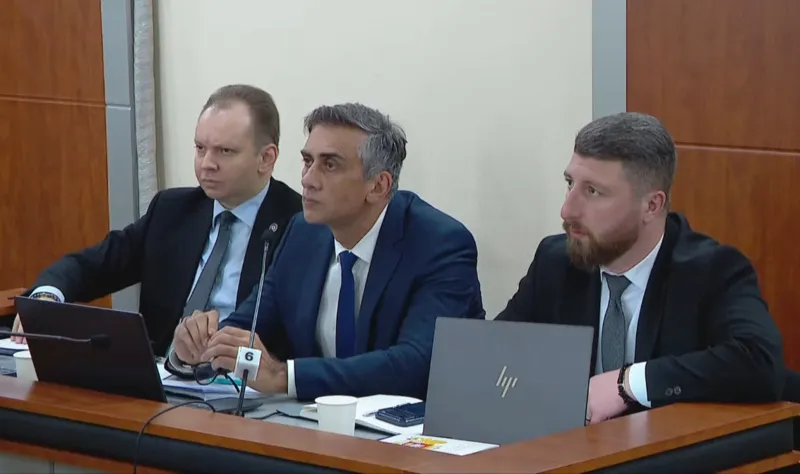
"How long must we listen, Your Honor, of what Nika Gvaramia is proud? If you wish to feel a sense of pride, you are free to do so once you step outside—that is your right, and you may take pride in whatever you please. Nika Gvaramia has had ample opportunity to discuss what he is or is not proud of; however, a court hearing is not the appropriate venue for a showcase of his personal views and sentiments. I strongly urge that the court return to the process of examining the claim." This statement was made by Archil Gorduladze, a representative of "Georgian Dream," during a Constitutional Court hearing. He spoke as a representative of the "Coalition for Change" was responding to a point raised in the claim—specifically, a statement attributed to him expressing pride in having been a member of the previous administration. Specifically, Archil Gorduladze’s objection followed a series of statements by Nika Gvaramia, which began with the following remark: “Yes, I believe that I was part of the government—at least, at the time, it was the best government this country had. I can repeat it here and now: I am proud of what we accomplished. However, there are things I am not proud of. Anyone who has worked in their life likely has both achievements they are proud of and things they are not.”
In response to Archil Gorduladze’s objection, Nika Gvaramia noted that the plaintiff, through strategic errors made in their strategic lawsuit, has opened a “window of opportunity” for the defendant—only to then object when that opportunity is utilized.
“Mr. Chairman, it seems to me that the plaintiff—by employing an incorrect tactic or strategy—has opened a window of opportunity for me and others; yet, as soon as we take advantage of this window, they realize they have made a mistake and begin to object. Issues like these cannot be resolved by ‘looking back with a lantern’ [i.e., trying to fix things after the fact].” The charge against me concerns a specific sentence; I am explaining the factual circumstances—what I actually meant by that sentence. If I am not given the opportunity to demonstrate what I intended, the accusation remains just that—an accusation. Do not dictate to me which parts I may recount and which I may not. I did not bring this charge against myself; in fact, the very person who has now raised an objection is the one who made the statement in question. Whether it was a mistake on their part, a procedural lapse, or something else entirely, I am simply seizing an opportunity. After all, knowing how to leverage an opportunity—and how to outsmart others—is generally the province of the clever, and it is also a procedural right. I am finishing up now—I don’t actually have that much to be proud of," Gvaramia stated.
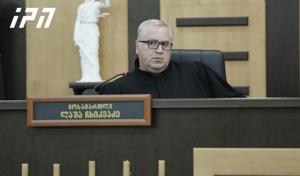
Revaz Nadaraia, the Chairman of the Constitutional Court, deemed the plaintiff's objection to be well-founded.
"The issue raised by the plaintiff is valid in this context—and here is why: you are being given a full opportunity to respond to the claims presented. The fact that you take pride in the education reform, or that you resigned from your position because your salary was insufficient—well, that is simply how things should be; there is nothing particularly remarkable to be proud of in that!" Nadaraia said, addressing Gvaramia.