Maia Kopaleishvili to Judge Eva Gotsiridze: I get the impression that you have not properly examined the constitutional complaint; for example, you did not pay attention to details that the plaintiff is using against us
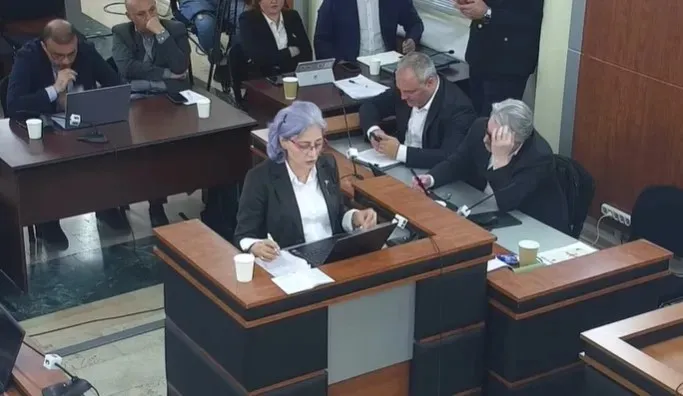
“Ms. Eva, I get the impression that you have not examined the constitutional complaint from the appropriate perspective. Do you know why I have this impression? For example, you failed to pay attention to details that the plaintiff is deliberately using against us,” Maia Kopaleishvili, a representative of the Coalition for Change, told Constitutional Court Judge Eva Gotsiridze.
Kopaleishvili made the remark in response to Gotsiridze’s question about whether “attempted storming of Parliament” exists as a legal term.
“Does the term ‘attempted storming of Parliament’ exist in any universally accepted legal sense that would allow us to discuss whether it is being used appropriately? Claiming that Parliament was stormed is an assertion of fact on their part. Sabotage is a recognized term, of course, and it has a broad definition. But would we find the term ‘attempted storming of Parliament’ in any legal dictionary?” Kopaleishvili said.
According to Kopaleishvili, the plaintiff is using this term to establish that the defendant has committed a crime.
“This is not about how we should examine the term ‘storming Parliament’ or ‘attempted storming of Parliament’ from an academic and legal perspective. The issue is that their aim is to attribute this to political parties in connection with the right to freedom of expression.
When we talk about an attempted storming of Parliament, we must not forget that there are legal tests established by courts with significant case law, including the US Supreme Court, which established such a test back in the last century.
Do you know what is important? I want the Court to focus on this. The plaintiffs discuss the dissolution of political parties without paying attention to the fact that this is not merely a matter of banning political associations. The prohibition of political associations must be considered closely in the context of freedom of expression. When they cite alleged facts concerning an attempted storming of Parliament, we must not forget that certain issues are being examined in connection with freedom of expression.
Democracy means precisely that when I make a statement within the bounds of freedom of expression, no matter how unpleasant it may be for the plaintiffs to hear, they must listen to it and tolerate it as well,” Kopaleishvili said.
Constitutional Court President Revaz Nadaraia interrupted her, noting that she should know how to address the Court.
“You should know how to address the Court. Let us refrain from judging whether the Court has properly read the complaint. You certainly do not know that, because the Court has not expressed any position on the complaint, and no one can draw such a conclusion,” Nadaraia said.
“That is how it should be, but it becomes apparent from the questions,” Kopaleishvili replied.