Levan Makhashvili: Georgia has been at the dialogue table in January, April, July, and November alike; I would like to ask Ambassador Herczyński: is dancing to the tune of those who insult people a sign of respect for Georgians?
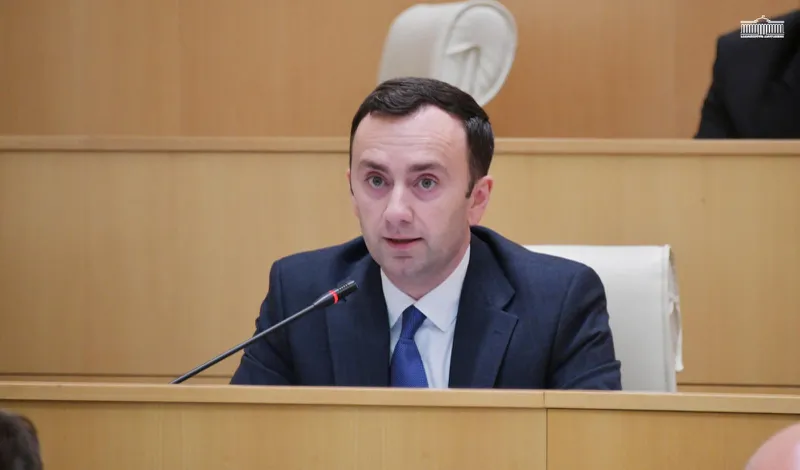
The Brussels bureaucracy is swimming against the current. Now, more than ever, is the time for dialogue rather than isolation—Georgia has been at the dialogue table in January, April, July, and November, and hopefully, EU representatives themselves will soon appear at that same table. This statement was made by Levan Makhashvili, Chairman of the Parliament's European Integration Committee, during a plenary session while commenting on the meeting of the Council of the European Union.
According to him, the statements made by Kaja Kallas and other European politicians amount to an admission that Brussels' policy regarding Georgia has failed.
“I would like to comment on the European Council meeting: the statements made by Kaja Kallas and others essentially acknowledge that Brussels' policy regarding Georgia has failed and has served only to damage the European Union's strategic interests. It was evident from the very beginning that this approach and attitude were flawed, unfair, and detrimental. Consequently, this attitude must change. Today, the Brussels bureaucracy is swimming against the current, to the detriment of the interests of the majority of EU member states. Now, more than ever, is the time for dialogue rather than isolation. Whether in January, April, July, or November, Georgia remains—and will continue to remain—where every responsible partner belongs: at the negotiating table. Georgia has always been, and remains, ready for dialogue based on mutual respect, and I hope that EU representatives themselves will soon join us at that same table. In the meantime, Brussels needs to decide—perhaps by January or later—whether it genuinely supports Georgia's European integration or demands political submission from the country," noted Makhashvili.
Furthermore, he commented on the event held in Kakheti dedicated to Europe Days, stating that the only thing government representatives were truly pleased about was that the EU Ambassador "danced well and had a good time."
Makhashvili points out that, unlike Paweł Herczyński, his fellow ambassadors—whether in Ukraine or Moldova—certainly do not have the luxury of dancing and having a good time, and he hopes Herczyński will duly appreciate this fact.
"In recent days, we have witnessed an outpouring of anti-government hatred in Georgia, masked by a diplomatic veneer. I am referring, first and foremost, to an event held in one of Georgia's cities that involved the EU delegation. I have a question for the organizers—and for the EU Ambassador personally: is this what constitutes public diplomacy or diplomatic activity? Does encouraging those who revile the Georgian people—and dancing to their tune—demonstrate respect for Georgians? Is this their understanding of diplomacy or of love for the Georgian people? You participate in Rtveli—an ancient Georgian tradition—alongside those who insult Georgians, and then you expect to speak to the Georgian population about the EU’s love or benevolence? The only thing that truly pleased us about that event was seeing the EU Ambassador dancing and having a good time. Unlike him, his fellow ambassadors—whether in Ukraine or Moldova—certainly do not have the luxury of dancing and merrymaking, and I hope this individual, the EU Ambassador, will duly appreciate that fact," stated Makhashvili.