Irakli Kobakhidze: Georgian Post is set to get a profit for the first time under proper and conscientious management; processes have changed radically since the management was replaced and Giorgi Eradze was appointed head
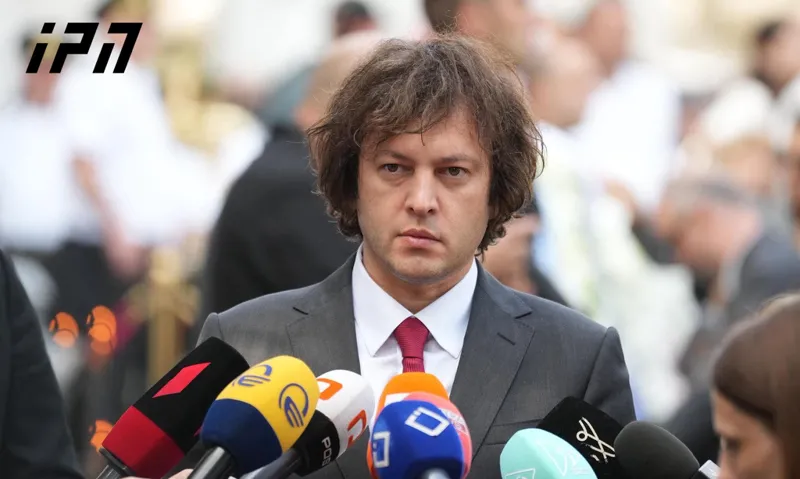
"We are completely cleaning up processes—corruption has been fundamentally eradicated, not only in the upper echelons but also in key state agencies and state-owned enterprises; as for lower-level corruption, a constant struggle is required in any country," Prime Minister Irakli Kobakhidze told journalists, commenting on the Investigative Service's entry into Georgian Post.
He added that Georgian Post had been a loss-making organization for years, but processes changed radically following Giorgi Eradze's appointment as head.
"Investigations are the business of investigative agencies. Our achievement is that we have radically increased the profits of Georgian Post. For years, Georgian Post was a loss-making organization; however, following a change in management and the appointment of Giorgi Eradze as its head, the company's processes underwent a radical transformation. This shift generated significant multi-million-lari savings and new revenue streams for the organization. Consequently, Georgian Post is set to turn a profit this year for the first time. The previous year ended with a loss of 7 million lari. This year, thanks to sound and conscientious management, the company will achieve profitability. This trend is expected to continue and gain further momentum in the coming years.
In general, improving management efficiency is an ongoing process. It took us about a year and a half—following the appointment to the leadership role—to identify issues and reorganize operations. By June of last year—roughly fifteen months into the process—we had completed this restructuring, having thoroughly examined all aspects of the business and implemented necessary personnel changes. This required time and involved overcoming various challenges, but the fact that those obstacles were successfully surmounted is what matters most to us. As for the past, if there is anything that requires investigation, the relevant agencies will handle it. Our task is to completely clean up these processes. Georgian Railway is a prime example of this; the process of cleaning up operations there was completed this year. It took time for Lasha Abashidze to fully overhaul the processes—there had been numerous intermediary and subsidiary companies (three subsidiaries, in fact) whose purpose was unclear, yet which employed a vast number of people. We managed to save millions of lari—approximately 20 million—at Georgian Railway alone, simply by optimizing staffing levels and eliminating 1,100 redundant positions.
We have been working very actively across all areas, and that work continues. It took us a year and a half, but the main result is that we have fundamentally rid not only the upper echelons but all relevant bodies—state agencies and state-owned enterprises—of corruption; the fight at the lower levels will continue," Kobakhidze stated.
"When discussing the 'deep state'—or situations involving severe external pressure—it is difficult to focus on multiple fronts simultaneously. We were so preoccupied with defending against attacks originating from outside the country that it was hard to concentrate on everything at once. Today, the state is stronger than ever; consequently, we have the luxury of being able to focus equally on repelling external attacks and combating domestic corruption. Corruption has been fundamentally eradicated—not only in the upper echelons but also within key state agencies and enterprises. As for low-level corruption, that requires a constant, ongoing struggle in any country," stated Irakli Kobakhidze.