


GYLA: The European Court of Human Rights found violation of the right to fair trial in the "Cable Case"
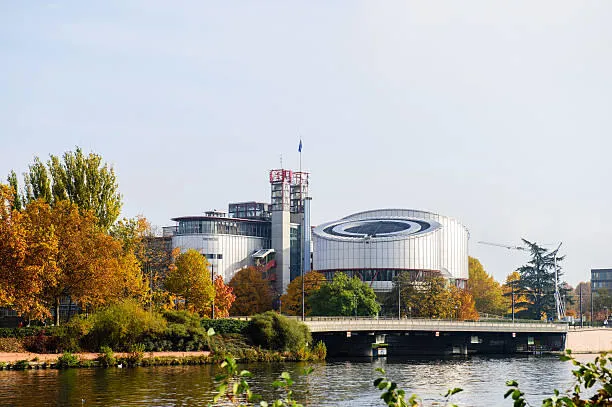
The European Court of Human Rights has found a violation of the right to a fair trial in the "Cable Case." This information was shared by the Georgian Young Lawyers' Association (GYLA).
Specifically, according to GYLA, on February 11, 2025, the European Court of Human Rights issued a decision on the case "Ghlonti and Others v. Georgia," based on a complaint submitted by GYLA. The court found a violation of Article 6, Paragraph 1, and Subparagraphs (a) and (b) of Paragraph 3 of the European Convention on Human Rights, which guarantees the right to a fair trial.
The complaint concerned the possible unlawful seizure/misuse of authority by Ministry of Defense employees.
National courts issued a conviction for the complainants. The complainants argued that their right to a fair trial was violated because the acts attributed to them were not individualized, and it was unclear how each complainant was involved in the actions they were accused of. Additionally, the evidence presented in the case was obtained in violation of the law. The complaint argued that the prosecution's change of charges prevented the complainants from preparing an appropriate defense strategy for the new charges. Moreover, they were unable to present proper evidence. The court noted that the decision to label someone as a defendant must contain both factual and legal grounds for the accusation, and as such, it is crucial in criminal proceedings.
In the case under consideration, the complainants were accused of embezzlement under Article 182 of the Criminal Code. Embezzlement and abuse of office are considered separate crimes under Georgian criminal law. Thus, when abusing office, the key element of the crime is intent to gain "advantage or priority for oneself or others," which does not coincide with the elements of embezzlement.
The court did not agree with the state’s position that the legal qualification of the crime was minor, as the requalification was based on the same facts. The court also explained that the European Convention requires that the accused be informed not only about the actions and facts they are accused of but also about the legal qualification given to those actions.
The court noted that during the trial, the complainants defended themselves within the framework of embezzlement charges. Ultimately, the Tbilisi Court of Appeals ruled that the charge was unfounded because one of the elements of the crime—having possession or control over the property in question—was not present. Before issuing the new ruling, the Court of Appeals did not inform the complainants that their charges could be requalified. The trial was not postponed for additional hearings, and the new elements of the charges were not examined in court. The complainants only learned about the legal assessment of the facts when the ruling was delivered.
The court concluded that in such circumstances, where the European Court allows for the possibility of requalifying a crime, the defense should have the practical, timely, and effective opportunity to defend itself.
Therefore, the Tbilisi Court of Appeals did not provide the complainants with an opportunity to defend themselves against the new charges. As for the Supreme Court, which had the authority to review the case fully, it failed to rectify the violations of the defendants' rights during the appellate process, as the complaint was declared inadmissible.
The court ruled that the complainants' right to be fully informed about the nature and grounds of their charges and to have adequate time and conditions to exercise their right to a defense was violated. Therefore, the court found a violation of Article 6, Paragraph 1, and Subparagraphs (a) and (b) of Paragraph 3 of the European Convention on Human Rights.
GYLA has considered since 2015 that the individuals arrested in the so-called "Cable Case" are innocent and that the evidence in the case does not support the claims of illegal or culpable actions. The case, according to GYLA, is politically motivated.
GYLA represented the interests of the complainants before the European Court of Human Rights.










