


NGOs: Police have negative biases against protesters, which violates the principle of neutrality – violence and degrading treatment of detainees continue
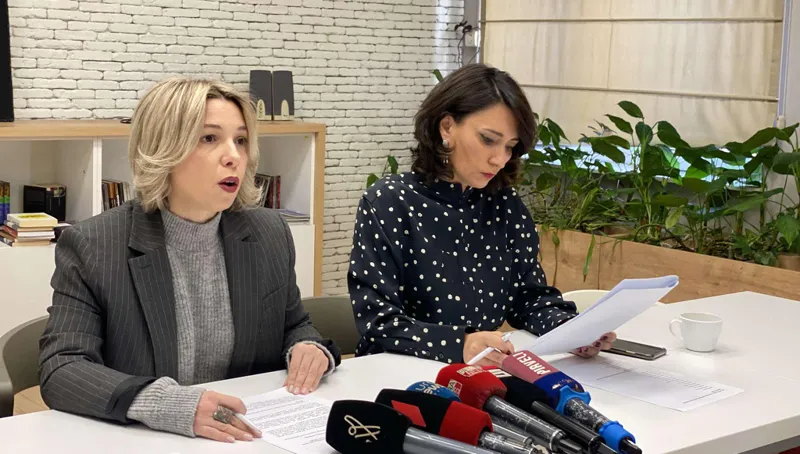
Police officers are not politically neutral; they have a clear political ideology and negative biases against protesters, which violates the principle of political neutrality guaranteed by the "Law on Police" – violence and degrading treatment of detainees by the police continue, according to information released by the NGO "Transparency International" and the civil platform "Georgia's European Orbit."
The statement also highlights that "the practice of inhumane and degrading treatment of female detainees continues," citing the case of Mzia Amaghlobeli, the founder of "Batumelebi" and "Netgazeti," as an example.
"Police violence and degrading treatment of detainees continue. On January 11, in Tbilisi, human rights defender Gia Jvarashvili was arrested for the second time with excessive force by the police, requiring hospitalization due to sustained injuries. Notably, during his first arrest on December 1, he was subjected to torture and inhumane treatment by the police. He suffered a concussion, broken ribs, and other injuries to his head and body. Additionally, during his arrest, police officers stole his mobile phone, wallet, and backpack.
On January 11-12, detainees in Batumi—including Mzia Amaghlobeli, Malkhaz Iremadze, and Temur Katamadze—were subjected to inhumane and degrading treatment following their illegal detention. According to detainees and eyewitnesses, Batumi Police Chief Irakli Dgebuadze physically assaulted them along with other officers and subjected them to physical and verbal abuse.
According to the Public Defender’s office, protesters detained on January 18 outside a police station reported cases of excessive use of force and ill-treatment by the police.
Regarding police violence against women and violations of their dignity, the case of Mzia Amaghlobeli is a clear example of the ongoing inhumane and degrading treatment of female detainees. On the night of January 11-12, the detained journalist stated that Batumi Police Chief Irakli Dgebuadze spat in her face. She was denied access to water and the restroom. To this day, Mzia has not been granted victim status, while Dgebuadze remains in his position.
Similarly, Nuca Eremiani, the wife of detainee Anri Kvaratskhelia, publicly stated that during a house search, she was subjected to police violence, which resulted in her pregnancy being terminated.
It is alarming that cases of sexual harassment, inhumane treatment, beatings, and rape threats against female detainees from November-December remain uninvestigated, with no one held accountable.
The Practice of 'Kidnapping' Protesters as an Illegal Form of Arrest: The unlawful practice of protesters being "detained" by unidentified individuals, effectively amounting to abductions, continues. Detainees are taken off the streets by plainclothes, unidentifiable individuals, and their whereabouts remain unknown to lawyers and family members for hours.
For example, on January 18, two young protesters leaving a demonstration on Rustaveli Avenue were detained near the Rustaveli metro station. The individuals who detained them wore no uniforms, had no identifying badges, did not introduce themselves, and did not inform them of the reason for their arrest. As a result, the detainees initially believed they were being kidnapped. Their families and lawyers searched for them for several hours without knowing their whereabouts. Later, the Ministry of Internal Affairs confirmed that the two young men had been detained by the police.
The next day, lawyers stated that the Ministry of Internal Affairs had arrested them by mistake, as they were actually looking for someone else. Lawyers also reported that after being detained, the individuals were subjected to having lasers shone into their eyes.
This police action could constitute a violation under Article 333 (exceeding official authority), punishable by up to three years in prison, or Article 143 (illegal deprivation of liberty), which, if committed against two or more persons, carries a prison sentence of seven to ten years.
According to witness testimonies and publicly available media footage, a highly concerning trend has emerged—police officers are not politically neutral. They hold clear political ideologies and negative biases against protesters, violating the principle of political neutrality guaranteed by the "Law on Police."
It is important to note that detainees, including victims of torture and inhumane, degrading treatment, have consistently reported that police officers use hate speech against them alongside physical violence. Publicly available video evidence confirms that police officers engage in political discussions with protesters, mock them based on their ethnicity, political beliefs, gender, ideology, religion, or other characteristics, use hate speech, and provoke them.
Since the start of the protests, not a single law enforcement officer or member of criminal groups has been held criminally accountable for hundreds of incidents of violence against protesters, activists, and journalists. According to the Special Investigation Service, the Georgian Prosecutor’s Office has granted victim status to 52 individuals, and forensic medical examinations have been ordered for 226 people injured at protests.
On the evening of January 26 in Gori, three masked individuals kidnapped, beat, and robbed civic activist Vakho Pitskhelauri. The activist links this incident to his participation in protests.
Politically Motivated Justice in Administrative and Criminal Cases Against Protesters: Since the elections, the state has detained nearly 500 people administratively and 44 criminally. Of the criminal detainees, 38 are in pretrial detention. Their ages start from 19, with 10 students and one female journalist among them. During the April-May 2024 protests, the state arrested 10 people, two of whom have since been released—one through a plea deal and another through a presidential pardon—while the rest remain imprisoned.
During criminal trials, courts impose pretrial detention on detainees without justification, ignore evidence of torture and inhumane treatment during detention, use arbitrary and unlawful search practices, delay proceedings, and consolidate multiple detainees' cases. In some cases, courtroom infrastructure prevents proper legal defense, and detainees have even suffered from lack of oxygen in the courtroom. Family members and other interested parties are often unable to attend hearings.
Judges handling these criminal cases: Ketevan Jachvadze, Tamar Mchedlishvili, Irakli Khuskivadze, Lela Maridashvili, David Mgelashvili, Nana Shamatava, David Kurtanidze, Levan Kolbaia, Arsen Kalatozishvili, Teona Epitashvili, Nino Sakhelashvili, Nino Tarashvili, Lela Kalichenko, Giorgi Gelashvili, Zviad Sharadze, Natia Gudadze, Nato Khujadze.
Prosecutors involved in these criminal cases: Vazha Todua, Shmagi Gobejishvili, Giorgi Mukbaniani, Nugzar (Nukri) Chitadze, Tamar Iakobidze, Roin Khintibidze, Ani Khubejashvili, Vladimer Turmanidze, Tornike Gogeshvili, Paata Tsetskhladze.
Police officers acting as false witnesses in administrative cases: Ucha Chulukhadze, Zaur Mikadze, Revaz Bichenovi, Tengiz Chitishvili, Giorgi Kalandadze, Nino Meladze," the statement reads.










