


Former US ambassador to the OSCE: the situation in Georgia is extremely sad now - if the opposition wins, there will be prospects for a reversal of recent years
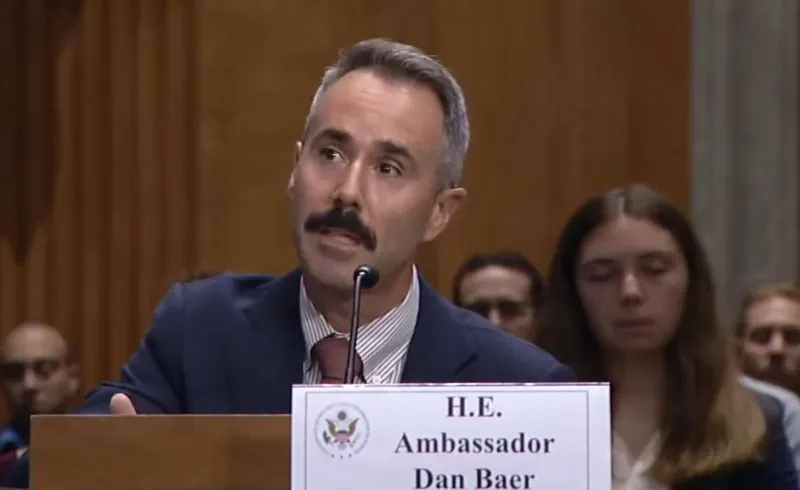
If the opposition wins in Georgia, there will be prospects of a reversal of the past years. The former US ambassador to the OSCE and the vice-president of the "Carnegie Endowment for International Peace", Dan Baer, announced this at the meeting of the Helsinki Commission dedicated to the issue of Armenia.
"There is an extremely sad situation in Georgia now. In particular, the decline of Georgian democracy in recent years was heartbreaking for many of us who saw Georgia as a bright light a few years ago.
Georgia was accused of being a conduit for sanctions and exporting goods to Russia that should not be exported to Russia. The current government has effectively copied Russia's anti-NGO law, which forces NGOs to register as [agents].
I know that Senator Shahin recently had a meeting where he was told that if the US stopped funding pro-democracy NGOs, it would solve the problems in Tbilisi. Of course, the US should continue to support those on the ground who represent the vast majority of Georgians, who want a free, democratic Georgian government and who want a free, democratic Georgian future.
I hope that we will stay involved with Tbilisi. Elections are coming up in October, right before our elections. And this election will be really decisive. If the opposition wins, the prospects for a reversal of the backsliding seen in recent years will be raised, as will the prospects for progress in Georgia's EU negotiations, now stalled by the setback.
So, the next 50 days will be very decisive in Georgia. I was in Tbilisi last week. It is interesting that I had the opportunity to meet with the President, who a few years ago when I asked about the setback, she told me and my colleagues that "don't worry, wait and see how it develops". And this year she came to our meeting and said that "our Georgian Dream party has become a Georgian nightmare". So her tone changed and he sounded the alarm, as did many people in civil society," Baer said.










