


Shalva Papuashvili: The existing Frankenstein model of civil society is unpromising, and implementation of the Transparency Law is a good starting point for solving this problem
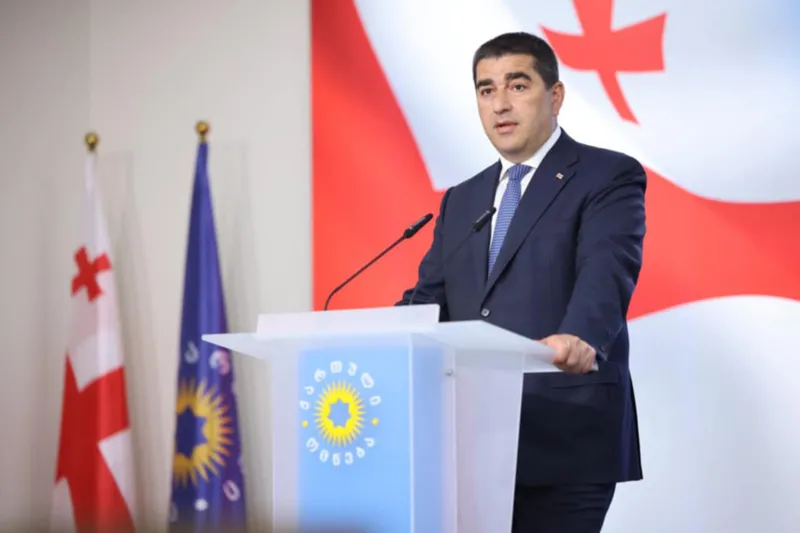
The existing Frankenstein model of the civil society is unpromising, and the implementation of the transparency law is a good starting point for solving this problem, - Shalva Papuashvili, the Chairman of the Parliament of Georgia, writes on the social network.
According to Papuashvili, ideological conformism and lack of transparency distinguish a totalitarian society from a truly democratic one.
"Last week, the Georgian "Civil Society", i.e. non-governmental organizations financed from abroad, intimidated and harassed their own member organization, "Sirtskhvilia movement". This organization had previously expressed its willingness to disclose its funding in accordance with the Transparency Law, but as a result of a widespread campaign of intimidation, it backed down, changed its decision, and even fired the director of the organization. This truly shameful episode clearly shows the closed mindedness, bigotry and hatred of foreign funded NGOs.
Let's say it directly: by creating an artificial civil society, the American and European donors created a Frankenstein's monster in Georgia, which, until now, attacked the state unconditionally, and now has indulged in cannibalism in its own ranks. This is an unintended consequence of creating an artificial civil society, which, unlike state institutions, is not accountable to the people.
Most NGOs depend on Western funding and do not care to reach out to ordinary citizens or local donors and implement projects that reflect the needs of the population. It is not at all surprising that such a creation, under the Western packaging, shows signs of Bolshevik behavior. Democracy develops in a pluralistic and diverse society. Ideological conformity and lack of transparency distinguish a totalitarian society from a truly democratic one. Unfortunately, Georgian 'civil society', with its covert foreign funding, narrowly defined beliefs and propensity for intimidation and violence, is more like the former than the latter. Foreign funded non-governmental organizations chose to shut themselves in and create a homogenous, limited and fragmented community. This does not promote pluralism or democracy. Intimidation, virtual violence, censorship of ideas, ignorance of reality, denial of people's needs have become their characteristic behavior. Vandalism is a particularly ironic part of this behavior. Let's leave aside the fact that vandalism does not fit into European norms and values. The real irony is that the funding that enables this vandalism, such as last week's graffiti on the parliament building, is considered "democracy aid" to Georgia. This was only one episode in the activities of "Sirshvilia", which had previously encouraged and romanticized the throwing of "Molotov cocktails" at police officers. Let us remind you that the results of such vandalism are to be corrected by the Georgian budget. By the way, it would be good if donors were to allocate a separate column in their grant applications to correct the chaos that "Democratic Aid" leaves in the streets of Tbilisi," Papuashvili wrote.
According to the chairman of the parliament, another ironic aspect, which is more damaging than the confusion of vandalism and democracy, is that donors are fascinated by their creation and uncritically accept the actions and opinions of NGOs.
"The fact that the artificial "civil society" does not reflect the interests of the people and the needs of the society remains unnoticed by the donors. Unfortunately, the donors themselves have become hostages of the funded organizations. NGOs have created a clan (to use their own favorite term) to manipulate funders. The lapse between expectation and reality, intentions and results, principles and manipulation has led foreign-funded NGOs to radicalism, becoming very similar to our disunited opposition parties. Donors must shoulder their share of the responsibility. It is time to rethink the situation around civil society funding and accountability. Transparency and dialogue will be crucial to unlocking this knot. the so-called Accepting civil society uncritically was a mistake. If the democratic principles of transparency, pluralism and competition mean anything, then they should apply to non-governmental organizations as much as they do to other public actors and state institutions.
The Frankenstein model is hopeless. Implementation of the law of transparency is a good starting point for solving this problem", Papuashvili wrote.










