


Mikheil Sarjveladze on Richard Nephew’s visit: Such a visit is a good opportunity to talk about facts, concrete results, which are reflected in all authoritative assessments
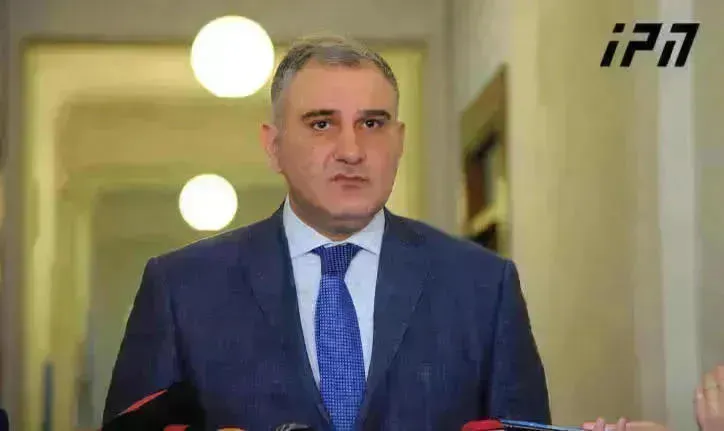
Such a visit is a good opportunity to talk through direct communication, based on facts, including not only the critical assumptions that the non-governmental sector may have, sometimes artificially, sometimes naturally, but also to talk about facts, concrete results, which are reflected in all authoritative assessments, - Mikheil Sarjveladze, the chairman of the human rights committee, told journalists about the visit of US Coordinator on Global Anti-Corruption Richard Nephew to Georgia.
As he mentioned, Georgia is a successful state in this respect.
"Strategic partners, partner states are naturally interested in Georgia and there is interest in almost all issues, especially when the topic is related to issues that cover 9 recommendations or 9 priorities. Accordingly, this interest is absolutely understandable, and on the other hand, such a visit is a good opportunity to talk through direct communication, based on facts, and among them, to talk not only about the critical opinions or assumptions that the non-governmental sector may have, sometimes artificially, sometimes naturally, but to talk about the facts, the specific results that we have and are reflected in almost every authoritative evaluations. Georgia is a state with an impressive result in this direction. We have excellent results, of course, this does not mean that we have no intention of further development, but we must admit that this is a successful state in the anti-corruption direction among them", said Sarjveladze.
Sarjveladze also responded to the issue of rehabilitation of Tsereteli Avenue and noted that the assumptions made regarding corruption have no basis.
"The issue is simple. Anyone who is familiar with tendering procedures knows very well that it is not under the control of the procuring organization who will be the winning company. If the winning company does not fulfill the obligation, this cannot give rise to the assumption of corruption of the procuring organization. I don't think that there is an objective basis for this", said Sarjveladze.










