


EUMM Head of Mission: 5 citizens of Georgia are detained in the so-called South Ossetia and 4 in Abkhazia – we actively call for the release and good treatment of all the detainees
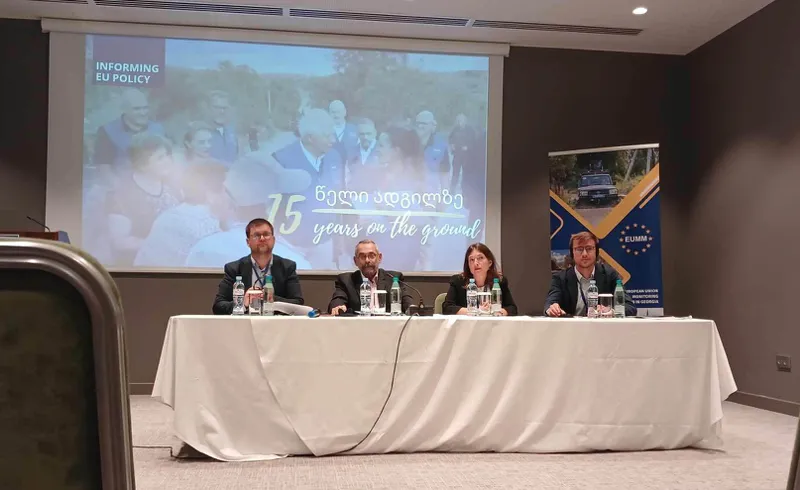
According to EUMM Head of Mission Dimitrios Karabalis, 5 citizens of Georgia are detained in the so-called South Ossetia and 4 in Abkhazia.
As he noted in his speech on the 15th anniversary of the EU Monitoring Mission in Georgia, arbitrary detention remains a problematic issue along both administrative boundary lines. According to him, they actively call for the release and good treatment of all the detainees.
He highlighted how EUMM engages with people living along the ABLs. “Our monitors talk a lot with the local population. We listen to their worries, problems and fears – we try to understand their needs and help, whenever we can,” said Dimitrios Karabalis. He gave the example of how EUMM brings together irrigation experts from Tbilisi and Tskhinvali to help local farmers on both sides of the ABL water their fields, particularly during summer.
He also elaborated on the Incident Prevention and Response Mechanism (IPRM) in Ergneti, the 114th round of which took place in September, as well as on the EUMM-managed Hotline, which has been activated more than 20.000 times since 2008. “These confidence-building mechanisms have resulted in numerous practical achievements, ranging from the release of detainees to finding lost cattle,” explained Dimitrios Karabalis.
The Head of EUMM also described that many challenges, such as the restrictions of freedom of movement, unfortunately persist. “Women, men, children, and the elderly living on both sides of the ABLs continue to suffer from fences, barbed wires, and ditches. The ongoing ‘borderisation’ has hindered their access to land and water, religious sites, deprived children of their chosen education, as well as buried dreams of many about a prosperous future. Families, neighbours, even entire villages remain separated,” said Dimitrios Karabalis.










