French Ambassador: There is a very hostile, very aggressive anti-Western narrative that is undermining Georgia and Georgia's interests
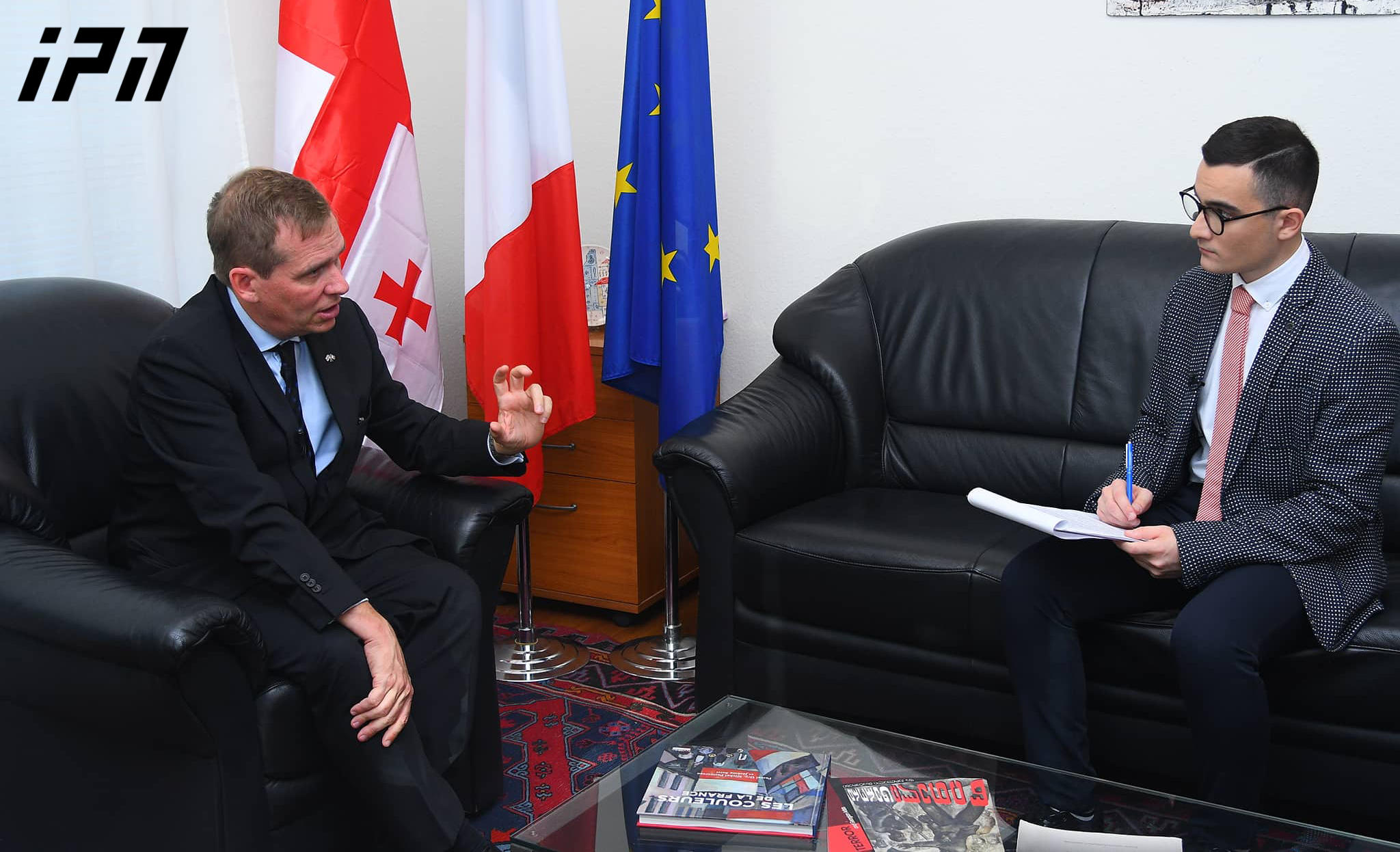
"Strength is in Unity" - I think that it is quite important that the Georgians work to make this motto a reality, French Ambassador to Georgia Diégo Colas, who is completing his diplomatic mission, addressed Georgian society and the political spectrum with these words.
The French diplomat, in his farewell interview, summarizes his three-year diplomatic activity and states that he and his team successfully coped with great challenges.
How well is Georgia fulfilling the 12-point recommendations of the European Union, how does he assess the growing anti-Western statements in Georgian politics, what is the role of Georgia in the newly established EPC, the escalation of the ongoing war in Ukraine, Georgia's contribution to the resolution of the Armenia-Azerbaijan conflict - at the end of his 3-year diplomatic mission in Georgia, French Ambassador Diégo Colas spoke about these and other issues in an exclusive interview with InterPressNews.
Let me begin our interview with the latest developments in Ukraine. There was some shelling in Kyiv and other Ukrainian cities by Russian forces during this week. It’s noteworthy that Moscow did take the responsibility for all these attacks. There are reports of causalities and destruction of critical infrastructure. This latest escalation in Ukraine comes after the Crimea bridge explosion, which was referred to as an “act of terrorism” by the Kremlin leader Vladimir Putin. Given this latest escalation in the Ukrainian war, should we expect France to designate Russia as a state sponsor of terrorism?
I think we have to very much stay focused on the big picture. And the big picture is Russian aggression, Russian terrible crimes during this conflict. The aggression itself is a violation of international law, but we have also seen the crimes being committed in the course of the war. So it's quite important to name things as they are. These are very serious crimes and it's very important that there is no impunity in that conflict. For that reason, we have been very keen to support Ukraine massively, to support on the military front, to support on the financial front, to support on the legal front to make sure that the proper resources are devoted to fighting impunity and isolating Russia as much as possible internationally, because this behavior is beyond the pall, beyond what is acceptable. And I think this is the reason for our efforts in the past, now six months. Especially with what happened this week, you can expect this effort to intensify and to continue even in support of Ukraine and in the determination to make sure that Ukraine prevails.
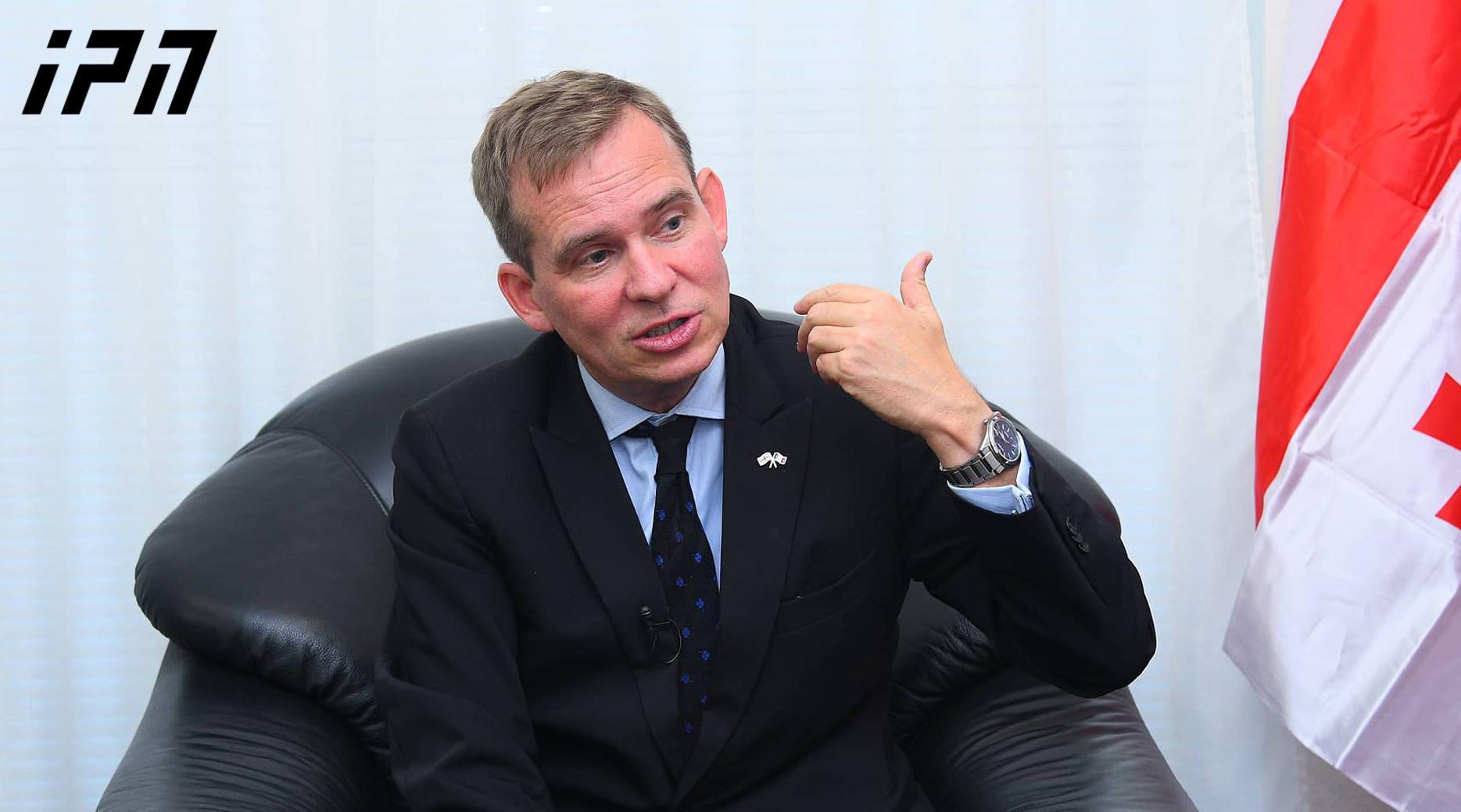
The Financial Times, one of the influential British daily newspapers, wrote recently that: “EU-Georgian relations have been in bad shape for years, largely due to the unreliable behavior of the Georgian Dream, which has ruled since 2012”. Do you agree with this statement? Is the ruling Georgian Dream party hindering Georgia’s path to EU integration?
In the three years that I've been here, I have refused to engage in the practice of foreigners making quotes about Georgian politics, which I don't think is a very healthy process. I think that the relations between Georgia and the EU are good, but they could be even better than they are. We are keen to support Georgia. It is important for Georgians to unite and put themselves in the position to be the recipient of that support. For that, the necessity is to focus on the reform agenda, to focus on the pro-Western agenda and to focus on a minimum degree of unity to build this healthy, lively democracy that we expect to see in Georgia.
Based on your observations, how is Georgia implementing the 12-point recommendations of the European Union? Do you see progress in political de-polarization, judicial independence, media reform, and de-oligarchization? How optimistic are you about Georgia’s EU candidate status?
The process that was launched in parliament, the process of all the working groups and all the legislative work that is going on - I think it is interesting and an important element to fulfill these conditions and it's the right thing to do. And I can really urge everyone to engage in that process and to listen to one another. I know that the Georgian Dream wants the opposition to join that process, and I think they are right. They also need to be prepared to listen to what the opposition has to say. They need to be prepared to listen equally to what civil society has to say. It needs to be a very inclusive process. The way things unfold is at least as important as the result.
I am encouraged by the first steps, but they are only the first steps and it's still early to draw conclusions on whether the whole process is successful. It's good that the process has started. Now it needs to produce good results.
Also, strategically, for Georgia, what is important is that this legislative agenda translates into a positive narrative. So it will take more than merely successfully concluding the legislative process. It's also a matter of making sure that Georgia moves from a situation where the only stories that we hear about Georgia are stories that raise questions, to a situation where we have a series of good news stories coming out of Georgia. It's important that all these positive developments take place, and that we have a succession of good news stories coming out of Georgia and positive narratives as well. Some narratives that enter into conflict with closer relations with the EU are problematic.
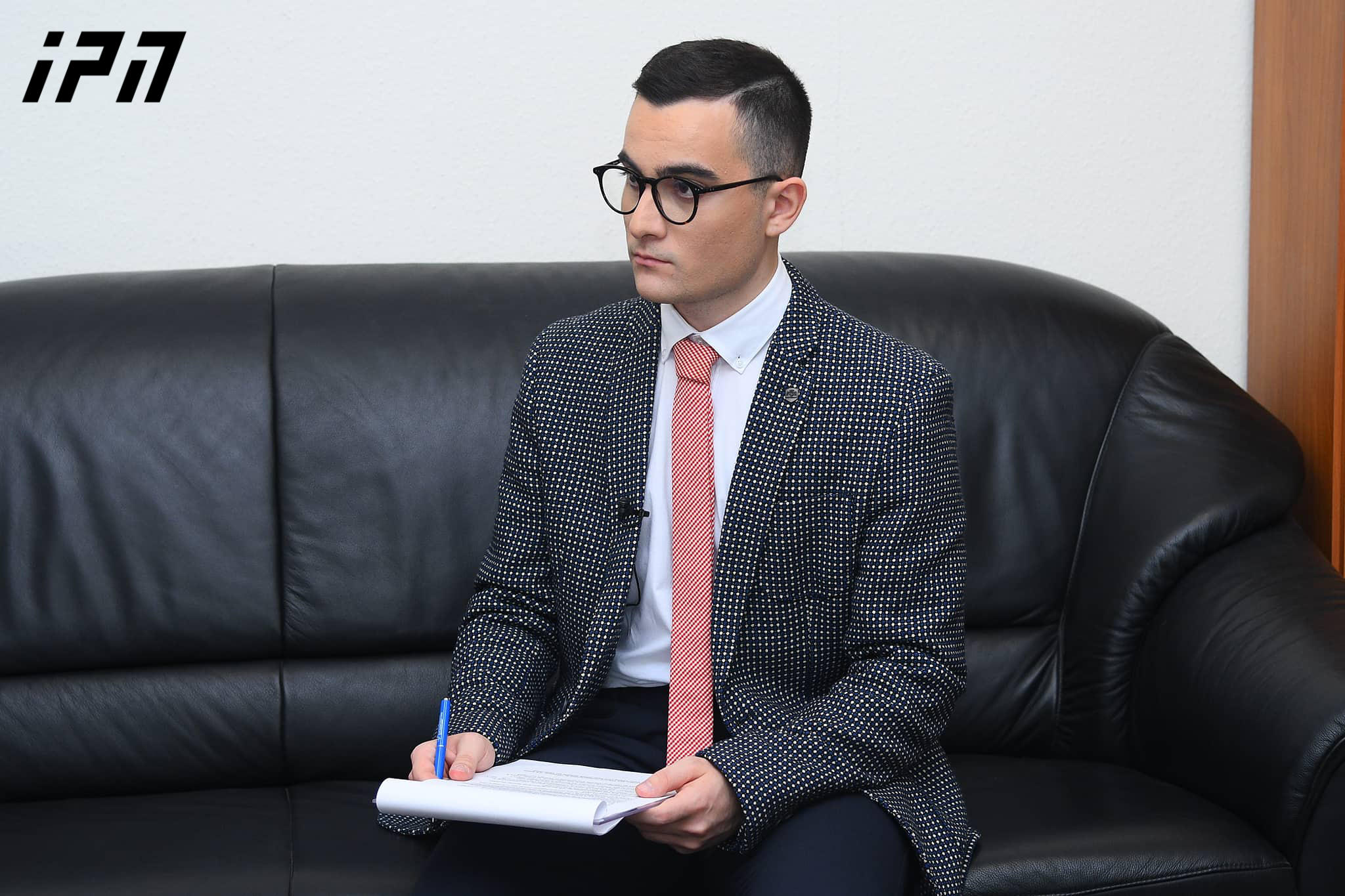
Last week, 5 more MPs left the ruling Georgian Dream party and joined the public movement “People's Power” founded by the four MPs who left the governing party earlier. As you know, this movement is known for its anti-western statements; accusing the West of dragging Georgia into the war and also attacking US Ambassador Degnan and the US Embassy here in Tbilisi. One of the MPs of the “People's Power” even purchased PosTV, a broadcasting company, in order to “let people know the truth”. Many opposition politicians, political experts, and some members of the Georgian public believe that this anti-western group of MPs is not acting independently and ruling the Georgian Dream party is behind the “People's Power” movement. Do you also believe that the governing Georgian Dream party is behind them?
I'm not sure I know. So I don't think I want to comment very extensively on that. What I do feel very strongly is that this very hostile, very aggressive anti-Western narrative is undermining Georgia and Georgia's interests. It is very often preposterously inaccurate and false. What is being said on the so-called second front is completely false. There's never been any request to do any such thing. And many of the statements are inaccurate. And more generally, these anti-western statements are shocking. I find the attacks on American ambassador Kelly Degnan, who is a friend and somebody I have enjoyed working with tremendously, very disturbing. And like I told you before, I think that the very important thing for Georgia right now is to make sure that the reform agenda that has been launched, that has been dynamic and made more dynamic since this summer, and I suppose it was a good thing to do, is not being undermined by problematic narratives, by negative stories.
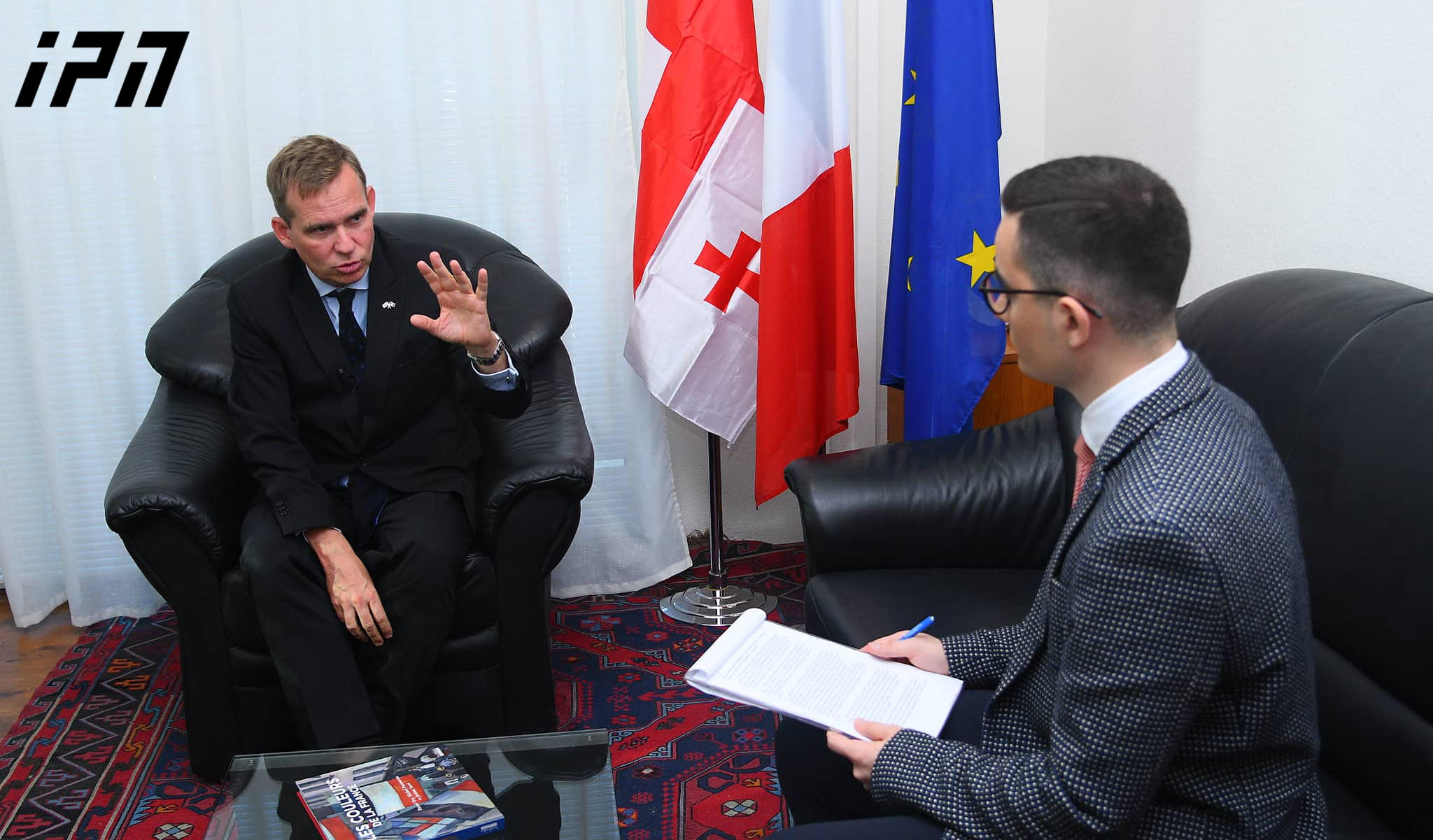
It's quite important that this positive agenda, this reform agenda, becomes a reality and translates into a positive narrative. And there is very much a risk of undermining that process, which would be very unfortunate. Now I don't want to enter into a discussion on who is doing what, who is behind whom and all these things. That's not for me to comment on. But when I look at this. I am concerned for this reason.
The European Political Community (EPC), a platform for political and strategic discussions about the future of Europe, established in 2022 by the proposal of French president Emmanuel Macron, held its inaugural meeting in Prague several days ago. Georgian Prime Minister Irakli Garibashvili attended the group’s first meeting alongside participants from 43 European countries. What is Georgia’s role in that platform? Why is Georgia’s participation important in EPC summits?
I think this community is a very important process. We see all Europeans join their forces to bring the European continent together. All Europeans building jointly their future is very inspiring. In Georgia, we have seen these past few months openings on the enlargement agenda which were unthinkable and ‘unhopable’ in a way. And yet they became a reality because of the war in Ukraine. It is the same thing with the European Political Community because the Community is a way to, basically, as we wait for all these developments on enlargement to become reality, to create this community already today and to have all Europeans built together their joint European future. When we mean all Europeans, to us, this includes Georgia because there has never been any doubt that Georgia is a European country. And so it's quite important that Georgia is part of that process. And I think it's an opportunity for Georgia to bring to the table their own views, their own ideas, their own ambitions for the European continent and to make sure, as was the case this week, that they are very much an actor of this building together of a European future by all Europeans, as the Prime Minister did last week in Prague.
The tensions between Armenia and Azerbaijan over border regions broke out into open conflict once again last month, leading to the deaths of at least 286 people on both sides. The leaders of Armenia, Azerbaijan, France and the European Council held negotiations on the sidelines of the first summit of the European Political Community (EPC) in Prague. Armenia and Azerbaïjan confirmed their commitment to the UN Charter and the Alma Ata 1991 Declaration through which both recognized each other’s territorial integrity and sovereignty. There was an agreement by Armenia to facilitate a civilian EU mission alongside the border with Azerbaijan. Azerbaijan agreed to cooperate with this mission as far as it is concerned. Do you think that Georgia can positively contribute to the peaceful settlement of the conflict between its neighboring countries?
Yes, I think this is an area where we are very close. I think that Georgia has been very active, especially in the last two years, to foster regional cooperation and to foster good relations between Armenia and Azerbaijan, as well as in terms of fostering somehow moving to some phase of conflict resolution. I think that the Prime Minister and the Georgian government and many forces in Georgia, because it's also been true in civil society organizations, have been involving themselves and saying we are the friends of both and we are here to help. That is also the case of the French government. We have also been very active both with the EU and in our national capacity as part of the Minsk Group and more generally as we care about peace in the international relations. So we have been very active too. I was very happy that Isabelle Dumont, the advisor to President Macron, and Brice Roquefeuil, our special envoy for South Caucasus, came to Georgia last week precisely to coordinate on many issues and particularly this one. This visit was a way to show our support for Georgia's territorial integrity after the visit of Lukashenko to Sokhumi. But it was also a matter of coordinating on this issue of South Caucasus because I have the feeling that Georgia is very active, that France is very active and that we have things to tell each other, and to do together jointly on this particular issue. It's important to ensure good connectivity between South Caucasus and the European Union. This is quite important for us as well as for Georgia. And I think there's a lot to do together on this.
Ukrainian President Volodymyr Zelensky formally requested an “accelerated accession” to join NATO after Moscow annexed the four Ukrainian regions. If Georgia follows Ukraine's lead by applying for fast-track membership of the Western military alliance, will such a formal move to join NATO change something for Georgia, or is it a just symbolic act and nothing more?
I think the war in Ukraine is changing the nature of what is possible in a tremendous way. We see things becoming possible now that were not possible before. Whether this is one of those things, we'll see in the future. But the extent of what is at stake in Ukraine now is considerable, for Georgia and for the entire region.
Your term as a French ambassador here in Georgia comes to an end. What is the most significant achievement in the bilateral relations between France and Georgia during your tenure as a chief of mission?
I think these have been challenging years because in those three years we have had COVID, which was a very big disruption, we have had war in Armenia and Azerbaijan, and we have had this unspeakable Russian aggression in Ukraine. So these were very heavy and important years. I think that we have met that big challenge successfully. All the teams in the embassy, in the French Institute, in the French school, in the Franco-Georgian University, in the French Development Agency, all the teams working together have been able, I think that is quite a big achievement, to maintain open human bridges between Georgia and the EU and between Georgia and France in particular.
The Franco-Georgia University when I arrived was a great project, but not a reality. It is a reality now. You have students going to France, and Georgian students going to France and doing these joint programs. Now we have three programs where students work, we are also opening more programs this year. We have had defense cooperation, we have had cooperation in the field of water management, in the field of agriculture, in the field of energy, which has translated into people going to France from Georgia, people going to Georgia from France, and expertise being brought together.
The French school has also developed during those years. We have now the full homologation until the 12th grade. Now students of the French school take the Baccalaureate in Georgia and even students from the region come to Georgia to take the Baccalaureate, whereas before they had to go to another country to do that. So we have been able to preserve plenty of contacts. During COVID it was quite important to maintain the border as open as possible. Borders were not always open in these times, but we have been able to maintain a degree of proximity and a degree of openness to Georgia from France to Georgia, which was bigger than most places.
And this was to me a strategic achievement because it is important that French people come and visit Georgia and know Georgia by being here, and that Georgians can come to France where they are very welcome, in order to build a joint future and to build their own Georgian future in close proximity with friends. And, in a challenging environment, we have been quite good at making that happen.
In your opinion, what is the current biggest challenge in bilateral ties between Paris and Tbilisi?
When I began my term, one of the first things I did was to help set up the Amilakhvari bilateral strategic dialogue. So we had the first meeting in Paris in December 2019. It is supposed to be a yearly meeting. We have been successful in what I call preserving the human bridge. This is the result of the working groups set up as part of the dialogue, which work in many fields and which have been successfully implementing the policies that were foreseen in the dialogue. So that's been the successful bit.
I think the more challenging bit has been to maintain a higher level of political dialogue. This was harder to program both because of COVID and then because of our own elections and because of the war in Ukraine. So for these reasons, it was more difficult to do and this remains to be done. It was quite important, in that respect, to have the visit that I mentioned earlier of Isabelle Dumont, adviser to the President, and Brice Roquefeuil, special envoy for South Caucasus. They were preparing the intensification of the high-level political dialogue which will increase in the coming months. It should reach the level where everything else is. This political dialogue should be very close and very intense, as it is in all those technical fields.
Could you please tell us what professional advice would you give to your successor - the incoming French Ambassador to Georgia and what would you like him or her to implement in the future for the strengthening of Georgia-France bilateral ties?
I think my successor will define his or her priority as he or she sees fit. And I'm sure it will be good. We are preparing plenty of things because, as we say in the French diplomatic system, an ambassador works for his successors. So we make sure that there are plenty of opportunities to seize. I think my advice will be both to make sure that he or she travels throughout Georgia and meets the Georgian people themselves so that he or she is better able to invite people from France to come to Georgia and themselves to discover the country. I think the striking thing when one does that, when one goes to all the regions of Georgia, as I think I have done to nearly all regions, is that one realizes how European, profoundly European this country is.
And it's quite important to encourage this and to show this and to see this. So I think for an ambassador it's important to visit the entire country and to invite people from France so that they see it too. Otherwise, if one just looks at the global map, one could think that Georgia is very far away. But when one comes here, one sees very much that one is in Eastern Europe. And it's important to make people feel this, not just know this by reading a note or by reading an article, but to feel it by going to Supras, by meeting people, by genuinely meeting students, business people, civil society organizations, local government leaders to measure the true European nature of Georgia.
I would like to take the opportunity and publicly congratulate you on your promotion at the French Ministry for Europe and Foreign Affairs. Could you please tell us in short about your new duties and responsibilities at the Ministry?
So I will be the director of legal affairs, in charge of representing the French government in all international courts and advising the minister on international law and on European law. In this legal directorate, the French one, we bring under the same roof both international law and European law. In that respect, I will continue to have Georgia very close to my heart because I think international and European law are very big friends of Georgia - International law, because I think Georgia has the right on its side on many issues and that this needs to be defended. Thus, defending international law means defending your territorial integrity and your freedom in the world. And European law, because I think European law is always a work in progress in order to make Europe bigger, and stronger, and we see it now with the European Political Community. And that very much impacts Georgia. So I will have Georgia very much in my mind in this new capacity. I have spent half of my career in this directorate which I'm now going to lead. It's a great honor to have been asked to lead this, and I'm very excited to start doing that job.
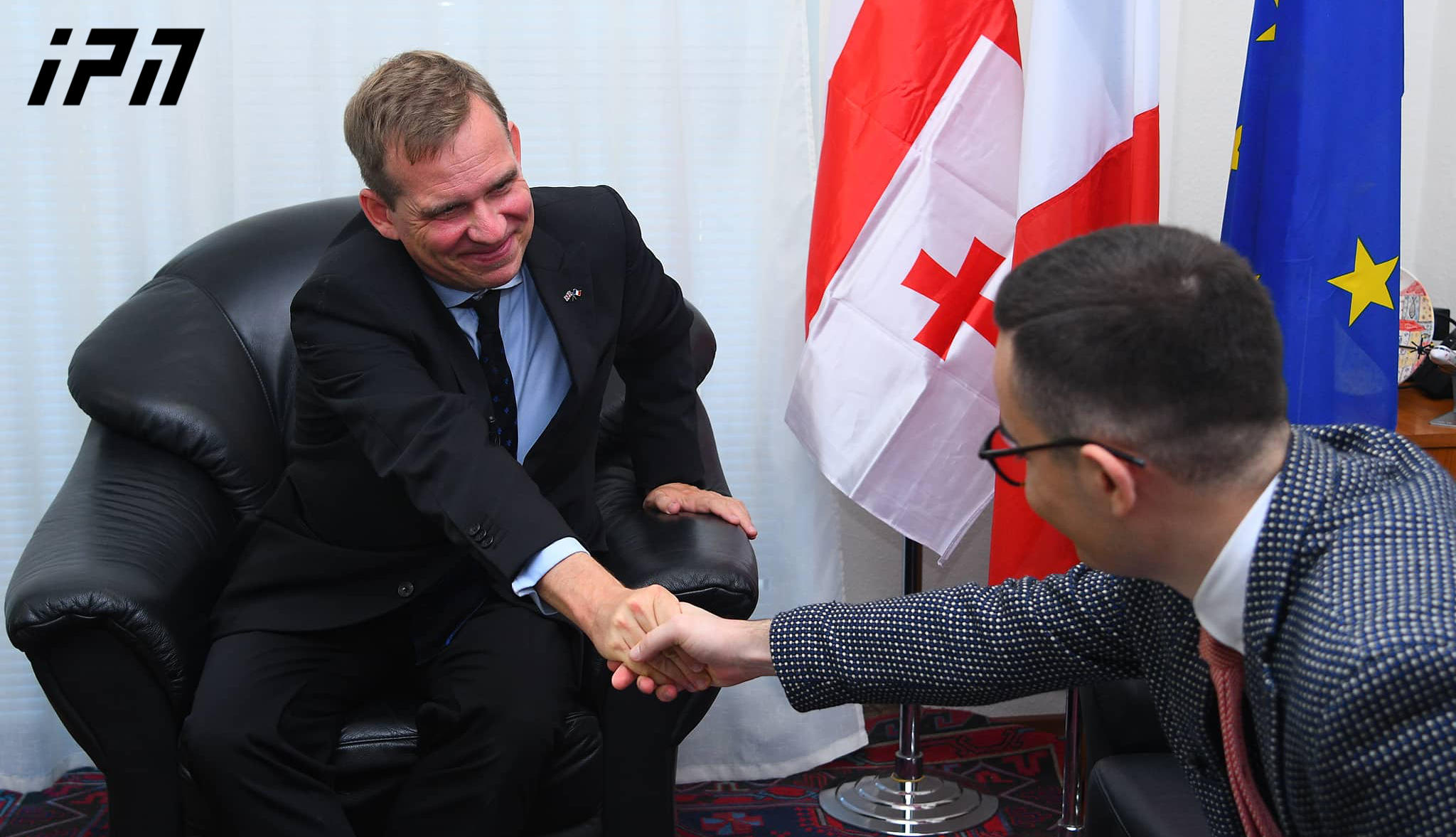
Mr. Ambassador, now you have the opportunity to briefly make a farewell address to the Georgian public and politicians through our news agency.
I will refer to your motto, “Dzala ertobashia” (Strength is in Unity). I think that it is quite important that the Georgians work to make this motto a reality. So together, Georgians should unite their forces to achieve the great potential that is on offer now, which was not necessarily possible in the past, in order to make sure that the opportunities are seized.
And also “Dzala ertobashia” between Georgia and its friends as it is vital to maintain the unity of the entire European family, the entire Western family of which Georgia is very much part. And we need to make sure that we remain together, that we stick together and that we find ways to work together to build together this new and promising reality.
Tornike Kakalashvili
InterPressNews