Mazahir Afandiyev: Novruz holiday, as an intangible cultural heritage, is primarily connected with seven various Sustainable Development Goals
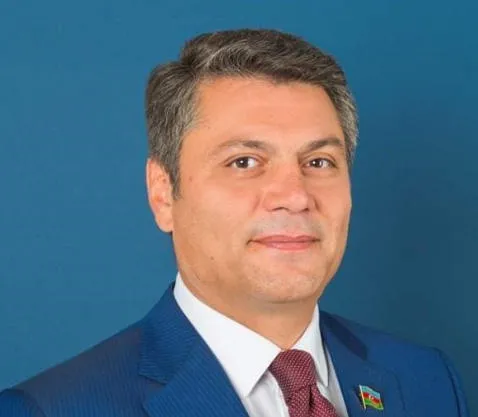
Intangible cultural heritages are connected with 17 Sustainable Development Goals and each-other through countries and concepts. The concepts are characteristics definedfor each cultural heritage element, such as holidays, dance, trees, handicrafts, customs, festivals and other significant elements of a nation. Also, the culture represents a major source of living and provide a strong sense of identity and community pride through traditional practices and holidays, - reads the statement released by Mazahir Afandiyev, member of the Milli Majlis of the Azerbaijan Republic, in connection with the Novruz holiday.
“Azerbaijani Mugham, Art of Azerbaijani Ashiq, traditional art carpet weaving, craftsmanship and performance of art of the Tar, Chovqan (traditional Karabakh horse-riding game), Keleghayi (women’s silk headscarves), Heritage of Dede-Qorqud (epic culture), art of miniature, Nar (pomegranate) holiday, traditional Yalli dance of Nakhchivan, and Novruz holiday, an important traditional practice is the number of elements on the Representative List of the Intangible Cultural Heritage of Humanity by UNESCO in regard to special efforts of the first Vice President and the goodwill ambassador of UNESCO and ISESCO, Mehriban Aliyeva.
Novruz holiday is one of the most important and favorite holidays of the Azerbaijani people which inscribed in 2016 to this list. It marks the arrival of spring, renewal of nature, and is celebrated on the vernal equinox, March 20-21 – the beginning of the astronomical New Year. Novruz is an old holiday which reflects the culture, national and spiritual values of our people and popularizes them in the world. Stressing that Novruz has ancient roots and always lives in the heart of our nation, after the restoration of independence, Azerbaijanis began to celebrate Novruz more solemnity. In addition to attaching nationwide importance to Novruz, great leader Heydar Aliyev always stood by his people over the holidays, congratulated and called on them to live in unity and accord. Nowadays, the President of the Republic of Azerbaijan, Ilham Aliyev keeps this tradition alive and always celebrates the Novruz by his people and guests of our country. Many people from abroad visit to celebrate Novruz holiday with unity in the multicultural Azerbaijan.
As an intangible cultural heritage, this traditional holiday is also primarily connected with seven various Sustainable Development Goals in regard to its elements on peace and prosperity, sharing culture and value, and nature”, reads the statement.
According to him, Novruz is a favorite holiday because every year traditional sweets of the national cuisine such as pakhlava, shakarbura, shorgogal and badambura are cooked and served at the festive table. Another favorite moment related to Novruz is not only existence of sweets and tasting traditional cuisine, however, a culture requires to mutual making and sharing.
“The neighbors, relatives, friends, and all family members visits to each-other despite the distances to make the sweets together and enjoying the holiday. Novruz is a holiday requires cooperation and unity. Through mutual making, people enjoy the spirit of being family and create values which passes future generations in centuries. Even the children enjoy the spirit of cooperation in the face of Novruz and practice the intergenerational dialogue with elderly people. Moreover, Novruz requires sharing with disadvantaged groups within society what have been made (SDG1 and 2). This assist “leaving no one behind” call in the framework of sustainable development and strengthens peaceful societies (SDG10 and 16).
The one of the significant elements of Novruz is traditional craftsmanship. Traditional craftsmanship is a sustainable, often under developed, source of revenue for many people, notably women and minorities in rural regions of Azerbaijan. Rituals and festive events help redistribute wealth and offer services to members of the community while strengthening social solidarity, illustrating how intangible cultural heritage can often provide a social safety nets to support poor and disadvantaged people in a community (SDG1 and 10).
In regard to WOMEN empowerment…
It is undeniable fact that women are the major force in realization of Novruz holiday in regard to all aspects and elements of the holiday. As many forms of living heritages, Novruz also demonstrates gender equality in the cultural sphere. Women often leader in artisanal production, transmitting their community’s identity through their craft while earning a living for their families. In the community-based performances, women foster solidarity among themselves and the wider community through music and dance while gaining global recognition for their living heritage through national performances (SDG5). Gender equality is also openly represented in this traditional practice, as well as festivals and rituals of Novruz.
In regard to NATURE…
Novruz is reflection of nature. It proofs how our nation is in the harmony of nature and celebrates the natural environmental changes. Novruz has direct connection with SDG6,15 and 13. In regard to its close relation with climate as it is defined the beginning of “Spring”.
The origin of Novruz dates back to ancient customs, cult of nature and fertility, as well as beliefs in nature’s decline and rise. During the month leading up to Novruz, every Tuesday is devoted to celebrating nature’s four elements consecutively: water, fire, earth, and air (or wind), the last one, called “Akhir Charshanba (Last Tuesday)”, representing the time when the leaves bud out and the spring finally begins. Moreover, being the land of the fire Azerbaijan has rich traditions relating to it. The fire is the symbol of purification and clarification. Bonfires are made in Novruz and before the holiday comes people in Akhir Charshanba, despite the age and gender, jump seven times over one, or once over 7 bonfires and say: 'Give me your redness and take my yellowness.' The fire is never put out by water; it burns down by itself.
The elements of “Life on land” (SDG15) are main attributes of Novruz. The growing of samani (green sprouting wheat) is the most sacred Novruz ceremony as the herald of spring. Moroever, “The land is waken-up”, “The spring is coming to our motherland”, “Swallows is coming back”, and “Novruz is time for harvest” are clear signs of Novruz that people have turned a long-term belief and organized the lifestyle over it. As Novruz holiday has direct connection with environment, any significant shift in climate can easily affect lifestyles of people who celebrate this holiday. The climate change is able to release the tradition and lead to destruction of hundreds of traditions like Novruz.
The humanity can also save the sustainable development of intangible cultural heritage by saving the nature and care about climate change too”, says Mazahir Afandiyev, member of the Milli Majlis of the Azerbaijan Republic.