Andrius Kubilius: October 31 parliamentary elections are a litmus test for Georgian democracy
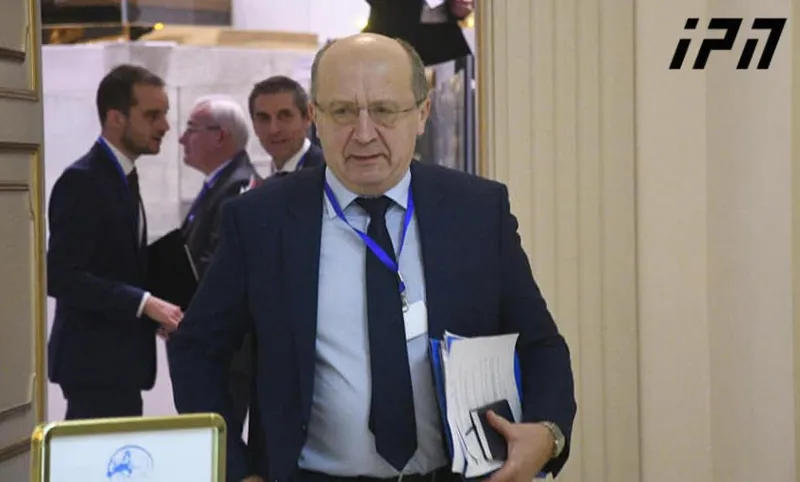
Due to the relevance of Eastern Partnership future and the upcoming parliamentary elections in Georgia, InterPressNews spoke to MEP Andrius Kubilius, a Chief of Delegation to the Euronest Parliamentary Assembly and a former PM of Lithuania. In addition to the future prospects of the EaP initiative, the MEP discussed the need of the EU’s strategic autonomy, his own and his colleagues’ expectations for the forthcoming parliamentary elections and the ongoing crisis in Nagorno-Karabakh.
After the Commission released its Communication “Eastern Partnership beyond 2020” you labelled it as disappointing in your article on Euractiv. Could you explain to our audience why did you find the EU’s new strategy towards EaP countries underwhelming and how you see the future of the integration of Eastern neighborhood.
Well, first of all, because of pandemics the process is still not over. There was a commission communication but there has not been a real Eastern Partnership Summit, it was only a video conference. So, we expect that next year, perhaps in February or later on, it will be a real Summit. The European Parliament made its own report on Eastern Partnership future. We hope that the summit will take note of the European Parliament’s proposals. Our difference is that we want to see more ambition in the EaP policy from the EU’s side. To make it brief, we would like to see that at least the most advanced countries of Eastern partnership region, which have association agreements, DCFTAs like Georgia, Ukraine, Moldova – were able to get what the Balkan countries are getting from the EU, in case they make progress. It means the membership perspective, more effective instruments of EU’s engagement and assistance. That's our vision. It's for a longer time of period, maybe for next decade or even longer, but that's what we want to see as a more ambitious EU strategy, EU philosophy towards the EaP countries.
Georgia, Ukraine and Moldova have been suggesting the 3+1 format to the EU. While it seems that a more active dialogue platform can benefit those three, some still maintain that it can leave other EaP countries behind. How do you see this initiative?
Well, first of all, the EaP region is very dynamic. We need to see that. The developments are even revolutionary sometimes. So, we are speaking about the trio countries like Georgia, Ukraine and Moldova and also Armenia, because we don’t want to be far away from them, that’s why we called it trio+1, as Armenia also has a special agreement with the EU - not the one like with Georgia, but also important. At that time, it looked like Belarus and Azerbaijan were not looking at EU integration with an ambition that for example Georgia has. Now Belarus is changing very rapidly. We don’t know what will be the outcome - but people are demanding democracy, basic things that you and we have. So, I would not be surprised if in certain years time Belarusian people will start to look into the possibility of having something at least similar to what Armenia has. That's why this division is not really a division. Simply, what we are saying is that the countries which want to make more, to achieve more - they need to have a good possibility to do so. For the countries which are more reluctant - we're not criticizing them, it's their choice - some kind of special individual arrangements, for example the one which exists between the EU and Azerbaijan, should be the instrument we need to implement. But, for those countries which have ambition to move forward, there should not be an obstacle to make more reforms and to move more rapidly towards integration.
As you mentioned, the region is quite dynamic. I thus wanted to touch upon the ongoing crisis in Nagorno-Karabakh. Georgia has been retaining neutrality throughout the conflict since the 90s. The country has friendly relations with Armenia and a strategic partnership with Azerbaijan. It seems that the further aggravation of conflict can have disastrous effects on Georgian economy. However, certain analysts have been suggesting lately that, apart from economic dangers, Tbilisi’s neutral status can be under threat too if Russia decides to put pressure on Georgia in terms of demanding a corridor for humanitarian or other type of aid for Armenia. Hypothetically, in this case, do you think that the EU and other western partners of Georgia can be ready to minimize this potential pressure coming from Russia on Georgia?
First of all, it’s very bad and very tragic that those conflicts are still here. The so-called frozen conflicts are the outcome of the collapse of the Soviet Empire. There is a conflict in Karabakh; you have occupied territories in Abkhazia, South Ossetia; Moldova has Transnistria and there are Donbas and Crimea for Ukraine. We are urging both sides, Armenia and Azerbaijan to stop military activities and to sit down and to renew negotiations. I will not elaborate about who is guilty and what should be the long-term solution. Of course, the solution should be a compromise. Both sides, Armenia, Azerbaijan and Karabakh need to agree on some type of compromise solution. Now, definitely, we can expect that Russia can try to use this situation for its benefit, including pressuring on Georgia. I’m trying to urge the EU to see its responsibility - much more of a strategic responsibility - to assist the solution to get peace at the end. If you listen to the debates in the EU, in the parliament we are talking quite a lot about EU’s strategic autonomy. First of all, the EU needs to agree on its strategic responsibility, especially for those neighboring countries, regions and conflicts which have been here for the last 30 years. It’s very clear that those instruments which were established by the international community - like for the Nagorno-Karabakh conflict, so-called OSCE Minsk group - are not bringing the result. I would dream to see the EU to try to follow what Americans and the Trump administration are doing, despite the fact that a lot of people are criticizing him. But, if you look at his international actions recently, he managed to get a result again on European continent at least for time being - a result for the Serbia-Kosovo conflict and a second result in Israeli-Arab countries’ conflict, which is close to Europe. That is what the EU needs to do. We need to learn from American how they achieved it. They managed to achieve proposing to those countries to agree on this, but also offered them that if they agreed on peace, they would get access to some kind of big benefits, economic benefits. That’s my view. That would allow really, even Georgia to live in a much more secure environment, not to be afraid that Russian would demand some kind of humanitarian corridor.
Just to follow up on your elaboration on the EU's strategic autonomy, do you think that the President von der Leyen’s promise about the geopolitical Commission proved unrealistic?
When she made that statement last year, we were very happy. Now, we are demanding where this geopolitical commission is. However, I see some progress, of course, we would like to see much more of it - that is EU should take the strategic responsibility like a first step towards strategic autonomy. But, of course, a lot of things need to be done. My conclusion is that in the EU there is some deep misunderstanding - I would call it a philosophical misunderstanding - the EU still perceives itself like a weak geopolitical player. In my view, the EU has a very big power - soft power of economic development, integration and so on, which is not used in a proper way, especially when it comes to conflict resolution. So, the EU needs to perceive itself really as an organization which has big power. The EU should not be afraid to use this power for its benefit.
Just to touch upon the pandemic and its management by Georgia. While we have been seeing certain democratic backslidings throughout the pandemic, even in Europe (Hungary might serve as an example), one might argue that Georgia managed to have a democratic breakthrough in this very period. The 8th March agreement between the opposition and the ruling party took place in the midst of the pandemic. This was followed by the relatively effective management of the pandemic by the Georgian institutions. Georgia has also been retaining its position in the EU’s “green country” list. How do you think the pandemic affected Georgia’s democratic/safe country image in the eyes of the West in general?
Of course, you can connect those issues, but you can also discuss it separately. First of all, it looks like Georgian government managed to fight against pandemic in an effective way, I don’t know all the details, but I’m looking at numbers - we can praise the government, especially when in the close neighborhood the numbers are much worse. It means that the government managed to achieve very good results. Again, I don’t know the details about how they did it, but that’s very positive. Second, what is very important is that Georgia made good steps forward and promises that its democracy will become even more mature with the 8th March agreement. I was in some way participating in the discussions between the ruling party and the opposition, we, the Euronest assembly were in Tbilisi last December. So, I praise this agreement which aims to have proportionality in the elections and to stop the practice of political influence on the justice system. Again, this was a very important agreement. It’s good that the agreement was implemented with changes in the constitution, despite political differences as not everybody who signed the agreement voted for implementation, because of case of Rurua and so on - which maybe was not the result that all participants wanted to see. But now, Georgia is coming to a very important moment - parliamentary elections at the end of October. That is what everybody in the EU will watch very carefully. It’s a litmus test in how mature Georgian democracy is. Democracy and rule of law values became one of the most important topics in the EU - we are looking at the development of countries both inside of the EU and outside of it. This is one of really very clear messages which I hope the Georgian authorities are also understanding. The Prime Minister was recently here in the Parliament and, of course, he got those messages from all the leadership of the EU. I hope that we shall see the clear evidence that Georgia is not backsliding in democracy, that administrative resources are not used for the benefit of ruling party, that justice system is really working without politicizing – that’s what we expect to see during the forthcoming elections.
Georgian elections have been regarded democratic at least for a decade now. What seems to be a problem is the pre-elections period, not the election itself. We constantly hear the cases of alleged physical violence on political grounds, pressure and bribery of voters, using administrative resources for political purposes. Could you sum up your expectations about how these elections can affect the integration process of Georgia with the EU, within the EaP framework at the 2021 Summit?
We expect that especially the ruling party, the government and the president will do everything to avoid the mistakes which were done before. You’re absolutely right, we don’t have any problems with vote calculation during the election day. The problem is about how things are going before the elections. There were OSCE/ODIHR recommendations which were implemented - so we hope that it can make the pre-elections situation much better. Now, as we were informed, OSCE is sending long term observers to Tbilisi, so there will be presence of international observers - that’s again for the benefit of Georgia. I hope that there will be clear evidence during pre-election and election day that Georgia is really a mature democracy and that elections are free and transparent. That will make a good image of Georgia. It will make Georgia one of the frontrunners among EaP countries. What we are expecting and what we shall do in Euronest is to introduce some kind of public comparison instrument which will regularly compare all EaP countries in their development. But, what we also expect is that we shall be able to compare EaP countries with Western Balkans. There were several reports earlier done by think tanks here in Brussels and some of them were showing that Georgia can be a real frontrunner for both regions - EaP and Western Balkans. But, this very important exam on basic democracy values, basic rule of law values will have a crucial importance exactly now.
The US Ambassador in Georgia, has raised the concerns (three times) about possible Russian interference in the parliamentary elections. The foreign interference danger seems real, with two recent cyber-attacks against Georgia, misinformation campaigns and reports of alleged Russian ties of two Georgian political parties. However, we rarely hear from Georgian authorities speaking publicly about these threats. Last July, Deputy Head of State Security Service of Georgia even stated that there's no danger of Russia meddling in elections. Do you think that Georgia should be more active in terms of raising these concerns with international partners and seeking more help?
I don’t know exactly how Russia can influence it and what we can expect. We know about several political groups in Georgia who are maybe closer to the Kremlin. But as we have seen, they don’t make a major influence on pro-western orientation. So, it’s very important that we can see a clear devotion to pro-western integration. Second, with regards to propaganda, disinformation and so on - perhaps you and we are living in that neighborhood of Russia where we are press experts - in terms of knowing what can happen and what is to be done - so in some way maybe we have some kind of natural resistance to this disinformation and that makes us safer than other countries inside the EU. It’s an important topic - the European Parliament created a special committee on that topic but it will still take time - because we need to explain to our friends in Europe what real Russian possibilities are to penetrate our political life - what kind of propaganda we can face and how we need to defend our systems form those possible influences. That’s for the future for us. All of us are trying to convince Europe to be much braver and more effective in this field, but it will take time.
Giorgi Jgharkava
InterPressNews