Tengiz Tsertsvadze: State of emergency and reintroduction of restrictions remain as yet unnecessary; numbers will be single-digit or up to 20 and we've to deal with it
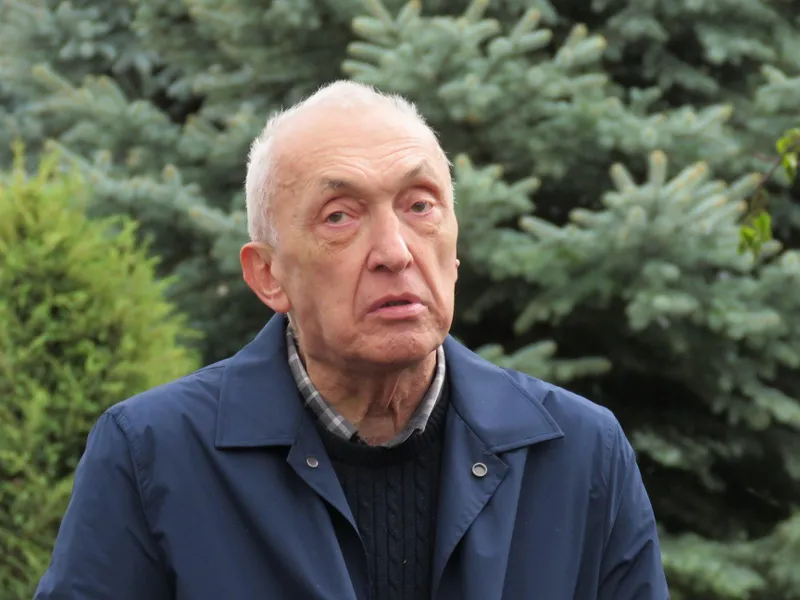
The numbers will be single-digit or up to 20 and we've to deal with it. There is no need of reintroduction of state of emergency currently, - stated Tengiz Tsertsvadze, Director General of the Center for Infectious Diseases, AIDS and Clinical Immunology.
According to him, the toughening of the restrictions will be needed, only if Georgia finds itself in a situation like it is in certain European and neighboring countries.
"State of emergency and reintroduction of restrictions remain as yet unnecessary. The numbers will be single-digit or up to 20 and we've to deal with it. If we see a situation like it is in certain European countries, in the US or in the neighboring countries; if we see such risk, then the restrictions should be toughened up. Currently, there is no need for reintroducing the state of emergency", - stated Tsertsvadze.
Tsertsvadze also noted that it is necessary to follow the existing rules.
"We need something else now - to follow the minimal rules: wear masks, observe social distancing, avoid crowded public gatherings These rules should be respected and if we mention the word "toughening up" it should be meant this way - to observe these minimal existing rules, not to reintroduce curfew nor to stop intercity travel", - stressed Tsertsvadze.
According to him, it's early to talk about the second wave because the first one has not ended yet. As Tsertsvadze states, there is a big chance that the first and second waves will be coupled without a rupture.
"Let's not divide it into waves, the first wave still continues across the world. It's true that the number of cases has decreased, but it's only true for Georgia and a couple of other European countries. If we have a look at world statistics, the cases are growing in number. This is a continuation of the first wave that has not ended yet. Thus, we should not be talking about the second wave. This can only be discussed after the first wave fully ends meaning that there are no cases and it lasts for some time, for example, for 2 weeks. The current situation should be regarded as a leftover, continuation of the first wave. The first wave has weakened but still continues. There are two options: 1. The leftover of the first wave gradually diminishes and once the heat appears goes down to its minimum. Then we can discuss whether we'll have a second wave in October-November, or whether it'll be stronger or weaker. 2. The second option means that the first and second waves are tied in a way that we can't see any rupture. It would mean that the coronavirus is not characterized by the extent of seasonality that we expected. It shows certain signs of seasonality in Georgia, but not elsewhere. Therefore, it's wrong to talk about the end of the first wave. It can end in about a month and then we can think about the second one. So far, it seems that the first and second waves will be tied", - stated Tsertsvadze.
For the record, the number of coronavirus cases was augmented by 13 and has reached 864. The number of active cases amounts to 161. As for the recoveries, one more patient has recovered from coronavirus, bringing the total number to 703.